Celebrating 30 years of Pride in Belgium
Reflecting on the past, present, and future of LGBTQ activism.

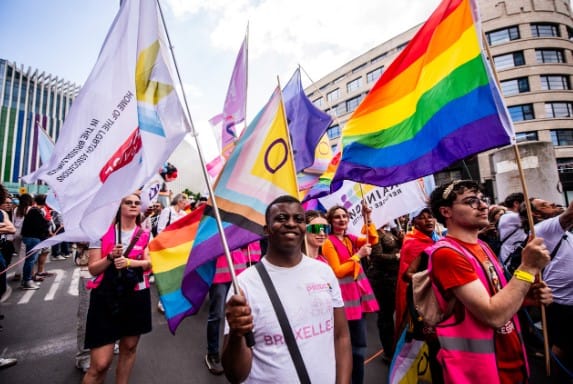
The 2026 edition of Belgian Pride will take place in Brussels on 16 May.
The event will be marking the 30th anniversary since Belgium's LGBTQ community first took to the streets.
The history of Pride in Belgium
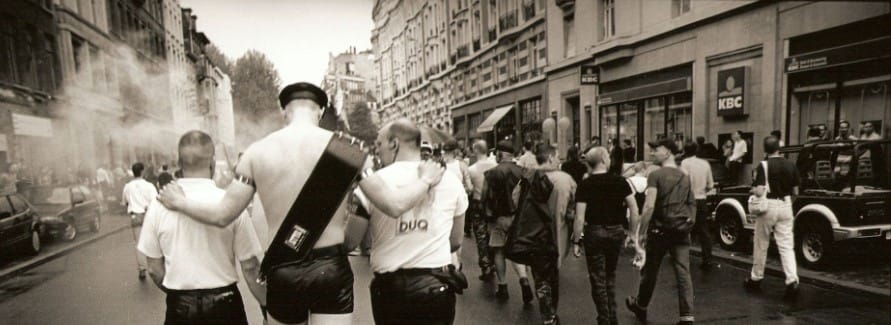
Belgian Pride grew out of the first “Gay Days” at the end of the 1970s, organised by collectives like De Rooie Vlinder and, later, by associations such as Tels Quels.
In 1996, the first large, unified march in Brussels, led by the Belgian Lesbian and Gay Pride association, marked the start of an annual event that gradually consolidated and eventually took the name The Belgian Pride.
From early on, the march was built around clear demands: anti-discrimination laws, legal recognition of same-sex couples, marriage and adoption rights, rights for trans people, increased lesbian, bi and intersex visibility.
A significant part of these demands turned into concrete legal progress in the 2000s, strengthening the idea that Pride is both an efficient political tool and a moment of celebration.
Evolving with the queer community
Over the years, Pride has changed: more floats, bigger stages, exploding attendance, and a normalised presence of institutions and major brands. Partnerships with visit.brussels and official recognition of Pride as part of the region’s intangible cultural heritage have reinforced its festive, event-driven side.
For many young activists, this evolution brings unease: on one hand, massive visibility and official support are precious; on the other, banks, corporations, and political parties marching with rainbow logos raise real questions about coherence and co‑optation. Community organisations keep insisting that Pride is not just a colourful backdrop for marketing campaigns, but a space of struggle for those still facing violence, financial insecurity, marginalisation, and racism, including in the heart of Brussels.
Generational change
Activists from the 1990s often describe a Pride that was smaller, more fragile, but also more radical, where simply marching openly was already a major risk. For them, seeing tens of thousands of people flood the city centre today, rainbow flags in shop windows and entire families walking in the parade, feels like a powerful symbolic victory.
Younger generations, who grew up with many legal rights already in place, tend to focus on different urgencies: institutional transphobia, police violence, racism within the community, the situation of migrants and undocumented people, and mental health. They call for a Pride that is more intersectional, more accessible, less centred on consumption and big sponsors, and more connected to queer struggles in Eastern Europe, around the Mediterranean, and in the rest of the world.
Looking to the future
The bankruptcy of The Belgian Pride association in 2024 highlighted how fragile the structures behind such a major event can be, even after almost thirty years of existence. The decision to maintain Brussels Pride with new partnerships and a stronger role for actors like RainbowHouse is a reminder that the march belongs first and foremost to the community, not to a single organisation.
The question “what now?” is still open, but several paths are clear: re‑anchor Pride in the Brussels associative network, ensure accessibility for minorities and disabled people, limit pink-washing, and give more space to marginalised voices in the programme.
Between carnival, business, and political struggle, the future of Belgian Pride will likely depend on our ability to hold together celebration and resistance, visibility and solidarity, the main stage and the margins.
Originally published by Ket Magazine - republished with permission
What's life like for LGBTQ people in Belgium?
What's life like for LGBTQ people in Belgium? Let's take a look at some of the key equality indicators.
Is homosexuality legal in Belgium?
Homosexuality in Belgium was decriminalised in 1795.
Are there anti-discrimination protections for LGBTQ people in Belgium?
Yes, comprehensive anti-discrimination protections have been in place since 2003.
Is there Marriage Equality in Belgium?
Yes, Belgium embraced Marriage Equality in 2003.
Belgium was the second country in the world to embrace Marriage Equality. The Netherlands was the first.
What's life like for LGBTQ people in Belgium?
Ranking second on ILGA's annual rainbow report for LGBTQ equality in Europe is indicative that overall Belgium is a good place for queer people to live.
There is a strong, vibrant and visible queer community across the country.
While there are isolated incidences of homophobia and violence, overall it appears that the LGBTQ community in Belgium is protected and valued.