Naked Men Talking: Alexis Gregory
Blending fact and fiction, bad gays, and sparking conversations.

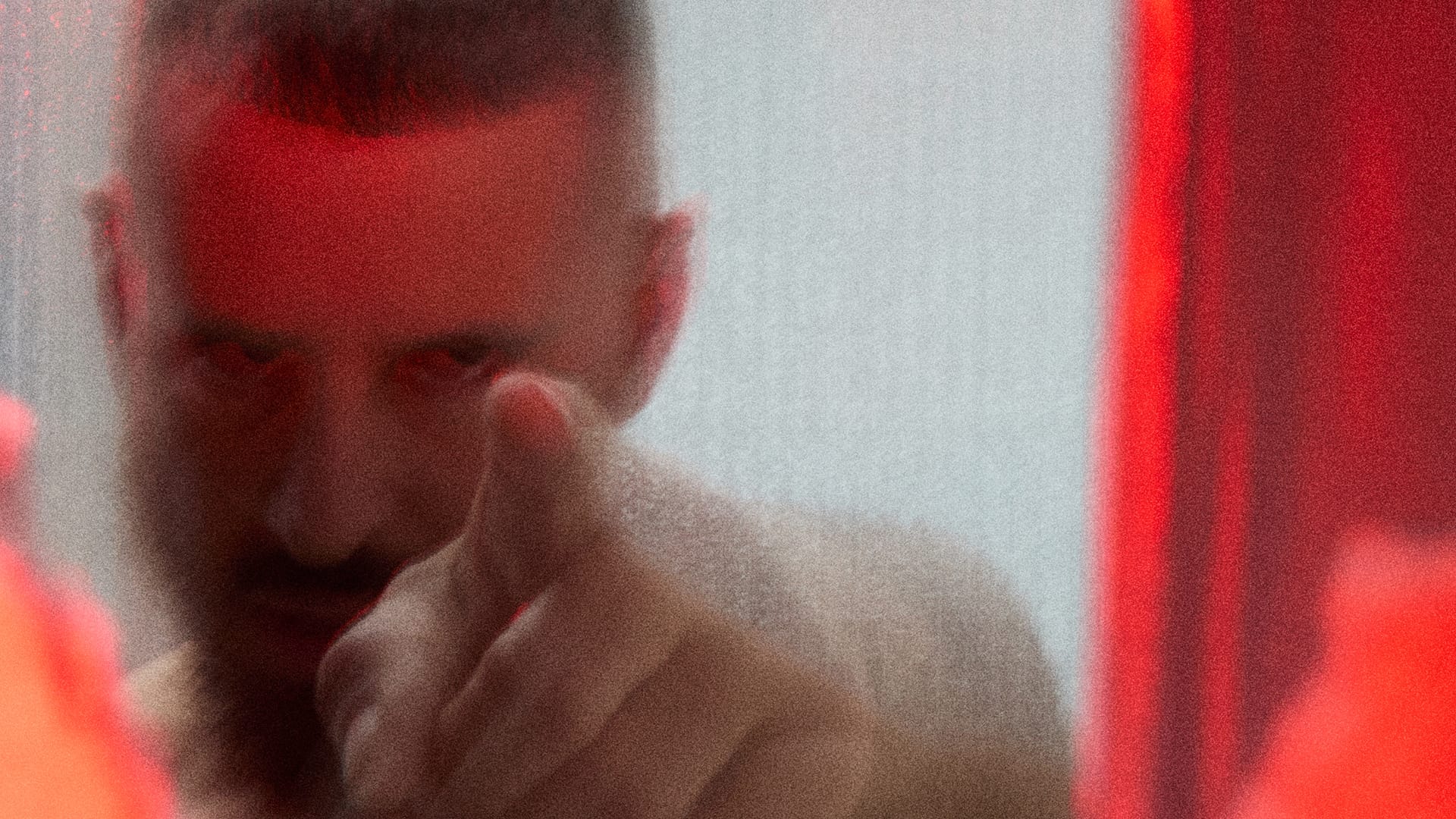
For our podcast, Naked Men Talking, I caught up with Alexis Gregory to talk about his latest production, Smoke.
In the conversation, we talked blending fact and fiction, bad gays, and sparking conversations.
You can watch and listen to the episode on Spotify.
This is a play that explores grief, psychosis and drug use within the queer community. Is this a fun night out at the theatre?
I think it might at points be a funny night out at the theatre. It's dealing with some very serious topics - like the ones you mentioned - but it's actually a very dark comedy at the same time.
My character in the play, Alex, really goes there with his experiences and what he depicts on the stage. But then - as I do in lots of my plays and my shows - I use comedy to either bring the audience in or it can relieve a moment of tension. There's comedy in everything I do, however hard-hitting it is.
You mentioned that the central character is called Alex - that's pretty close to your own name. Is this a version of you and your personal experiences or is this a completely fictional story and character?
I chose the name purposely because it is similar to my name - although the play has been performed abroad by an actor with a completely different name and it still stayed as Alex.
Everything that happens in this play is based on my own experiences or things that I've witnessed, or - because my character is quite extreme in what he does - I've taken ideas and just pushed them further, but only slightly, or I've transposed an idea: if that person could have done that in real life, it would be very easy for Alex to do this in my play.
So, he's not based on me, but he's based around me and based on what I've seen.
He speaks differently to me. He acts very differently. But I am playing with the idea of him being similar to me because the play deals with a lot of things that are happening in reality around us. And we try to break down the barriers of what is theatre and what is a play.
I want people to feel like this real-life guy, Alex, has just walked into the space and taken it over and has basically poured his heart out to them. I'm absolutely playing with that idea of is it Alex, is it Alexis, how much of this is real? Because Alex doesn't have a grip on what is reality and what is fiction.
Thinking back over recent things I've seen you do, is this the first time or the first time in a while that you've created something that is so heavily drawing on your personal experience and your personal identity and what's happening around you?
There's probably a bit of me in many of the characters that I write. My first play, Slap, was set in the gay clubs. It was about the relationship between a gay guy and a trans woman - that was very much based on what I observed.
I'm always looking around to see what inspires me, but I would say this is probably the most honest piece. I think it's the most personal in terms of what Alex reveals. I'm very guarded. I'm very private, so I'm shining a light on several aspects of the world and the queer world, but it's not necessarily all of my experiences.
You mentioned how you're breaking down the barriers between the audience and the play and you're making it feel as real as possible. How have you found that process?
I found it interesting. I don't normally write realistic plays. Normally everything I write is stylised. So, even in terms of the language, this is the most realistic.
In terms of the acting, it's the most realistic as well. I've enjoyed breaking that fourth wall. It definitely adds something to the play where everyone is exposed in the space and the audience become me and I become the audience - there's nowhere for anyone to hide.
It's very exposing for me as an actor. I go out with really no tricks and no tools. We have a couple of sound effects of a phone ringing that I'm going to speak to my director about and see if I can get rid of those. We had some bright lights flashing at the end that I also want to see if we can get rid of. I would love to do this with no lighting design, no sound design, just purely Alex and the audience.
Some people have gone along with that. Some people haven't understood it. They thought, why is he doing that? Is it not finished? Did they run out of time or money? This is guerrilla-style theatre.
You said that Alex is a bad gay, that he behaves badly - I was interested what the standards of behaviour or moral compass are that you're measuring Alex against?
Alex behaves badly in comparison to everyday social codes that we all either go along with or reject. Often, if you reject them, it can flip back onto you and you can have problems in life. Alex breaks all of those rules.
When I was writing the play, I realised really early on that Alex could do anything - there was nothing he wouldn't do - and I thought, as a writer, that was really exciting because I could take the character anywhere while still keeping it based in reality because some of the people that Alex is based on got themselves into very extreme situations
As well as it being exciting for me as a writer, I hope it's exciting for the audience because it should feel dangerous and they should think, what's he going to do next? Where's he going to be next? Is he going to sit next to me? Because I sit in the audience and move around. So Alex throws all of the conventions of society out of the window.
Things like drug use, for example, are normalised in the queer community and have been for decades - but actually that's frowned upon by many other people. I think "bad gays" are problematic to a wider straight society because it's not the kind of gays that they like to see. They like to see the well-behaved ones. And they're also problematic to queer people. As queer people, we're constrained by respectability politics.
I never set out to make Alex likeable. But interestingly, I think people did like him. They felt for him. But I didn't have to go out there and think I need the audience to like me. I just had to tell the character's story.
Alex is dealing with some really serious personal issues. There are things that happened to him when he was an adolescent that feed through into his adult life. He's on the edge. Lots of people are on the edge in 2026. These are very challenging times and I don't just think queer people will relate to that. I think it goes beyond that.
If you look specifically at queer men and try and unpack what is wrong with queer men, is drugs the problem or is our online lives the problem? If we ban porn, would that fix everything?
That's a very wide question. I'm sure there are lots of queer men out there who would say they have very satisfied lives and are very well adjusted.
I'm of an age where I grew up under Section 28. I remember HIV and AIDS from when I was a child. It was definitely something that was always in my head. Alex is my age and I think gay men of my age have a particular story to tell. We've seen all of these changes that we didn't think would happen when we were kids or adolescents.
I'm always interested in the experience of younger queer people and older queer people. I think we have a unique set of problems as queer people. There's been massive changes in terms of community - so much of queer culture is built around drugs and alcohol.
For the UK tour of Smoke, you're partnering with the organisation, You Are Loved. This translates into a two-part experience for audiences, you've got your performance as Alex, followed by a post-show panel to explore local conversations around the show's themes. Who are those post show conversations aimed at?
You Are Loved is a really worthwhile organisation and charity that focuses on drug misuse in the community, isolation, mental health, bereavement and unexplained deaths and premature deaths - we've seen a lot of those especially with gay men over the last few years. It's one of the reasons I wrote this play.
They will be hosting these 45 minute panels after the play - you have the play for an hour, we have a little break, and then we have a 45-minute panel. It's really going deeper on some of the themes in the play that cross over with You Are Loved's work.
They're aimed at anyone who's bought a ticket. I imagine we will have people from the queer community. We will have our allies. We will have people who are interested in theatre and new writing, people who are interested in community and social and political issues.
It's a space to decompress after the play and try and find some answers maybe and be inspired and just listen to voices. It could be someone from a queer charity or organisation. It could be a local person who's engaged in community. It could be another playwright on the panel or an author or an actor or an activist or somebody who's got experience of what the play is about. We're just trying to create a really special experience for audiences.
I was interested how doing this show - putting it together and performing it - has perhaps shaped your sense of self and how you're connecting with other queer men?
Just to see people respond positively to the play has been really moving.
On a personal level, I've never really acted in this way before. I've never played this type of character. He's quite streetwise, my character. He's quite tough. He's the son of immigrants, like I am. Again, I'm playing with that idea of where does the actor begin and where does the character begin.
I know you said you're quite private and guarded, but this is such a personal performance and a personal piece. Given the way you've had to create it and put it together, has that led to any moments of reflection for you in the way that you're navigating queer life and some of the issues that the play is touching on that are happening around us all the time?
I haven't had a chance to step back because we've been working on this behind the scenes for a year, and now we've got the funding to do it in January.
What do hope that people feel when they come to see Smoke?
I hope people just feel. I hope people just have a emotional response. I hope they question themselves, they question their beliefs, they get taken away somewhere else, they recognise the characters, they are shocked by the characters because they don't recognise them. I hope they're entertained.
Tour Dates
21st – 25th April 2026
- Omnibus Theatre, 1 Clapham Common North Side, London, SW4 0QW
- https://www.omnibus-clapham.org/
28th April 2026
- Co-presented by Giddy Up
- White Rock Theatre, Studio 27, White Rock, Hastings,TN34 1JX
- https://whiterocktheatre.org.uk/
30th April 2026
- Ironworks Studios, 30 Cheapside, Brighton, BN1 4GD
- https://www.ironworks-studios.co.uk/
9th May 2026
- Norwich Theatre Royal (Stage Two), Theatre Street, Norwich, NR2 1RL
- https://norwichtheatre.org/
12th May 2026
- Co-presented by Bristol Pride
- The Wardrobe Theatre, 25 West Street, Bristol, BS2 0DF
- https://thewardrobetheatre.com/
14th May 2026
- ARK, Albion Road, Margate, CT9 2HP
- https://www.arkcliftonville.com/
21st May 2026
- Lowry, Pier 8 The Quays, Salford, M50 3AZ
- https://thelowry.com/
4th June 2026
- Hull Truck Theatre, 50 Ferensway, Hull, HU2 8LB
- https://www.hulltruck.co.uk/whats-on/drama/smoke-plus-you-are-loved-panel/
12th June 2026
- Lighthouse, 21 Kingland Road, Poole, BH15 1UG
- https://www.lighthousepoole.co.uk/
20th June 2026
- Nottingham Playhouse, Wellington Circus, Nottingham, NG1 5AF
- https://nottinghamplayhouse.co.uk/