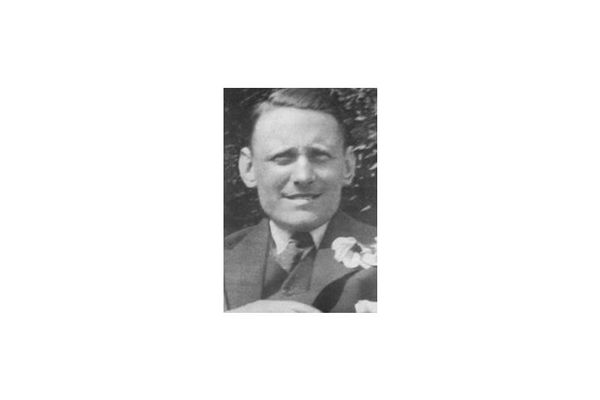
100 Heroes: Robert Newburgh
The gay man whose trial established a link between queerness and subversiveness.


Robert Newburgh was an 18th-century British army chaplain whose 1774 court-martial represents one of the earliest and most detailed documented cases involving homosexuality on the eve of the American Revolution.
Early life
Newburgh was born in 1742 near Dublin, Ireland, into a wealthy Protestant family.
He entered Trinity College at age 16, and went on to join the military in 1772.
Military service
Newburgh entered the British Army by purchasing a commission to become a chaplain. This was a common practice for officers at the time.
He was assigned to the 18th Regiment of Foot (the Royal Irish Regiment), which was deployed to North America.
He sailed from Ireland and arrived at his station in Philadelphia in May 1773 to begin ministering to the soldiers.
The controversy
In 1774, Newburgh faced a general court-martial for "Vicious and Immoral Behaviour" after being accused of buggery with his male servant, who was also his foster brother.
While the name of the male servant is not recorded in the surviving documents, historians have established that Newburgh and the servant grew up together in Ireland. It's possible that the servant was the son of one of the women who worked for Newburgh's family and became part of the family's household.
Newburgh and the servant shared a bed. In the court proceedings, Newburgh seemed to confirm that the two men had shared a bed since childhood.
Beyond the sexual allegations, Newburgh was targeted by military superiors for dressing flamboyantly, challenging military authority, and encouraging lower-ranking soldiers to stand up against mistreatment.
Newburgh used Enlightenment ideals of equality to argue that his personal style and intimate life should not affect his military standing. His conservative accusers linked Newburgh's queer behaviour to political rebellion - this was a period of history when rebellion and revolution was on everyone's mind.
The outcome
If Newburgh had been found guilty of buggery or sodomy, he could have been executed. However, the court-martial failed to convict him on these grounds as there was insufficient evidence.
He was found guilty on some of the lesser charges and was sentenced to a six-month suspension from his position.
After serving three months of the suspension, Newburgh's sentence was commuted and he returned to his position as chaplain.
Later life
After returning from North America, Newburgh divided his time between Ireland and France.
Newburgh died in 1825 at the age of 83.