Naked Men Talking: Joel Bray
We talk dance, identity, and daddy-issues.

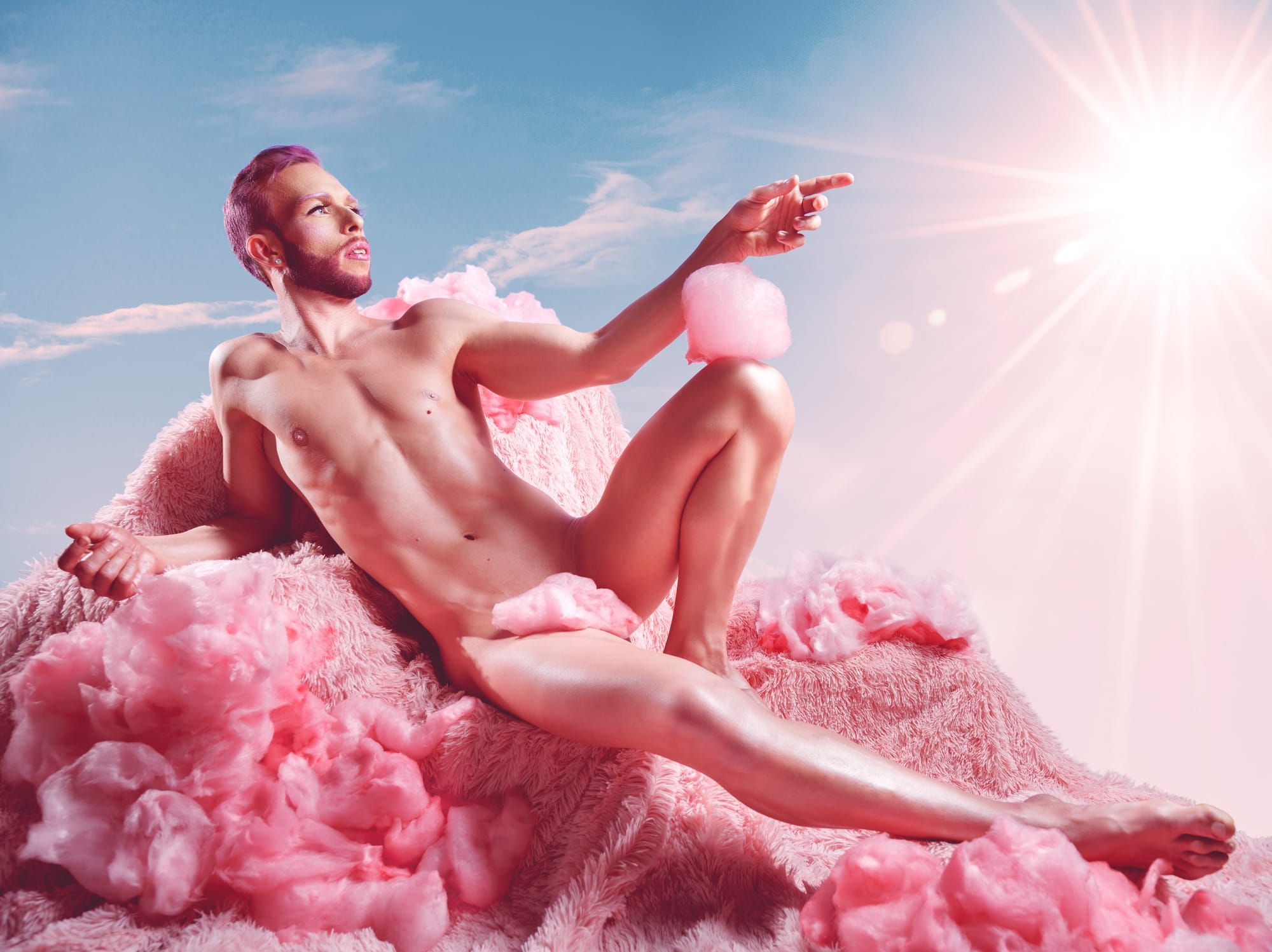
Joel Bray is bringing his show Daddy to the Edinburgh Festival Fringe - it will run at Summerhall from 6-31 August.
For our podcast, Naked Men Talking, I caught up with Joel for a behind-the-scenes look at the show.
In the conversation, we talk dance, identity, and daddy-issues.
Daddy is an autobiographical show. Was there a light-bulb moment where you realised that you were ready to put your story on stage?
The show started from a a weird place where I was interested in the ancient Greek myth of Tantalus.
He committed a crime so great that the gods came up with what they thought was the worst possible punishment ever - he was condemned for eternity to be in a pool of water with a tree of fruit over him. But every time he was thirsty and he lent down to drink, the water would recede. And every time he was hungry and reached for the fruit, the the tree would move away in the wind. He was condemned to spend eternity being hungry and thirsty with his needs just fingertips away but he couldn't quite reach them.
Why did that story resonate with you?
As a gay man, living in the culture that we live in, it's like everything you desire is just there. The hot boys are just there - if I could just get the right hook-up to come around, I'm going to meet my Prince Charming - it's being offered to me, but I can never quite touch it.
That was the beginning of the story. I thought I was going to make this work about this Greek myth, but it ended up being highly autobiographical and very personal to me and my story and my family's story.
How did you first discover and start to explore that dance was something that you were passionate about?
I was a complete bookworm of a child. I didn't do anything artistic, I didn't do anything athletic, and I didn't do anything musical.
I went to university and I was studying law. I remember sitting in these lectures going, what am I doing?
I was also coming into contact with my Aboriginality, with being an Aboriginal man.
I'd grown up with my white mother. I always knew I was Aboriginal. I always had a kind of a relationship with my father, but I didn't know anything about my culture. I didn't really know much about even my own personal family history.
I actually started dancing as a way to connect with my culture. I went to an Aboriginal and Torres Strait Islander dance school and I started to learn our traditional cultural dances. And I was like, baby, this is for me. I found my thing.
How did that feel when you unlocked that?
I was very separated or divorced from my own body. I didn't have a relationship with it. At the same time, I was also coming out.
I'd moved from the country. I was in Sydney. It was the late 90s - Sydney was amazing. I discovered the dance floor and then I discovered sex.
The show centres around your experience of craving home and a father figure, and the show presents you as someone who has daddy issues. What does "daddy issues" mean to you?
My dad left me when I was young. I've been on a journey my whole life, unpacking that. I'd internalised that he must have left me because there was something wrong with me.
When I came out, I began to plug that hole that I feel inside me - double entendre absolutely intended.
I've been stuck in this cycle of seeking it from from men, from sex, but it's like a sugar hit - it doesn't last. I have to go and do it again, and again, and again.
I'm very sex-positive. I'm not saying there's anything wrong with being a complete slut, but Daddy was a moment in this journey in my life of really grappling with that question of: why am I seeking that? What is it I'm seeking other than just intimacy and fun and connection? I could feel there was something more existential that I was looking for in this sex.
So, Daddy is about both my relationship with my father, but also his absence and the seeking of belonging in other men.
You created the show in 2019, you've performed it numerous times over the years. You've obviously evolved during that period - does the show reflect that evolution?
I've kept it as is - for two reasons.
One, I know that place that I was at resonates with a lot of people still. I'm really intimate in the show, in that there's no separation between me and the audience in the performance. We share the space together, so I'm inches away from some of the audience members and I can see in their eyes and I can see people crying and nodding their head. So I've kept it as is because I know it's powerful, it still lands, it's still important.
But also, this journey is incomplete. I still catch myself on the merry-go-round of of affirmation seeking and obsessions with boys - it still happens. I'm much further along in that journey than I was when I made the work, but it still feels really important to keep it as it is.
But the the other part of the story is that I also talk about the loss of my culture through my dad because my dad wasn't there. I wasn't able to do the ceremonies that I would have done as a young Aboriginal man. I didn't get to learn my language. I didn't get to learn the dances. And there's this repeating motif in the work of me trying to kind of wrap my body around this particular iconic Aboriginal dance move that we call a shaker leg. And my clumsiness and clunkiness and the alienness of that movement is this touchstone of grief that happens throughout the work.
But since then I have massively repaired my relationship with my father. Works that I've made since then are much more a celebration of my reconnection with my culture.
Given the journey you've been on, are there any lessons that you wish that you'd learned earlier, any insights that you wish you could tell your younger self?
My mother just moved house recently and she had all these photos - hundreds and hundreds of photos. There were all these photos from me as a as a young man - from that era when I was coming out and trying to figure out who I was and how I relate to the world and what does it mean to be gay. The fashion choices were questionable - I was still figuring that out - but I was gorgeous. I had no idea.
The other the other part of it was I gave up my faith. I grew up Christian. I wouldn't be Christian now, but I wish I hadn't thrown out faith and belief and spirituality entirely. I thought it was a either-or proposition that I had to choose one or the other. As I grow older, I'm realising that queerness and spirituality actually go together beautifully.
What do you hope that people feel when they come to see Daddy?
The Edinburgh Fringe is going to be the first time where I really get to present it to non-Australian audiences.
I'm really hoping audiences come with an open heart and I'm sure they'll find a lot in how their own family and their own history and their own culture - wherever they're from - intersects with this story.
But also, the show is very silly. It's very sexy. It's really fun. We play together. I'm hoping people turn up after a couple of drinks because the show is loose and it's messy.
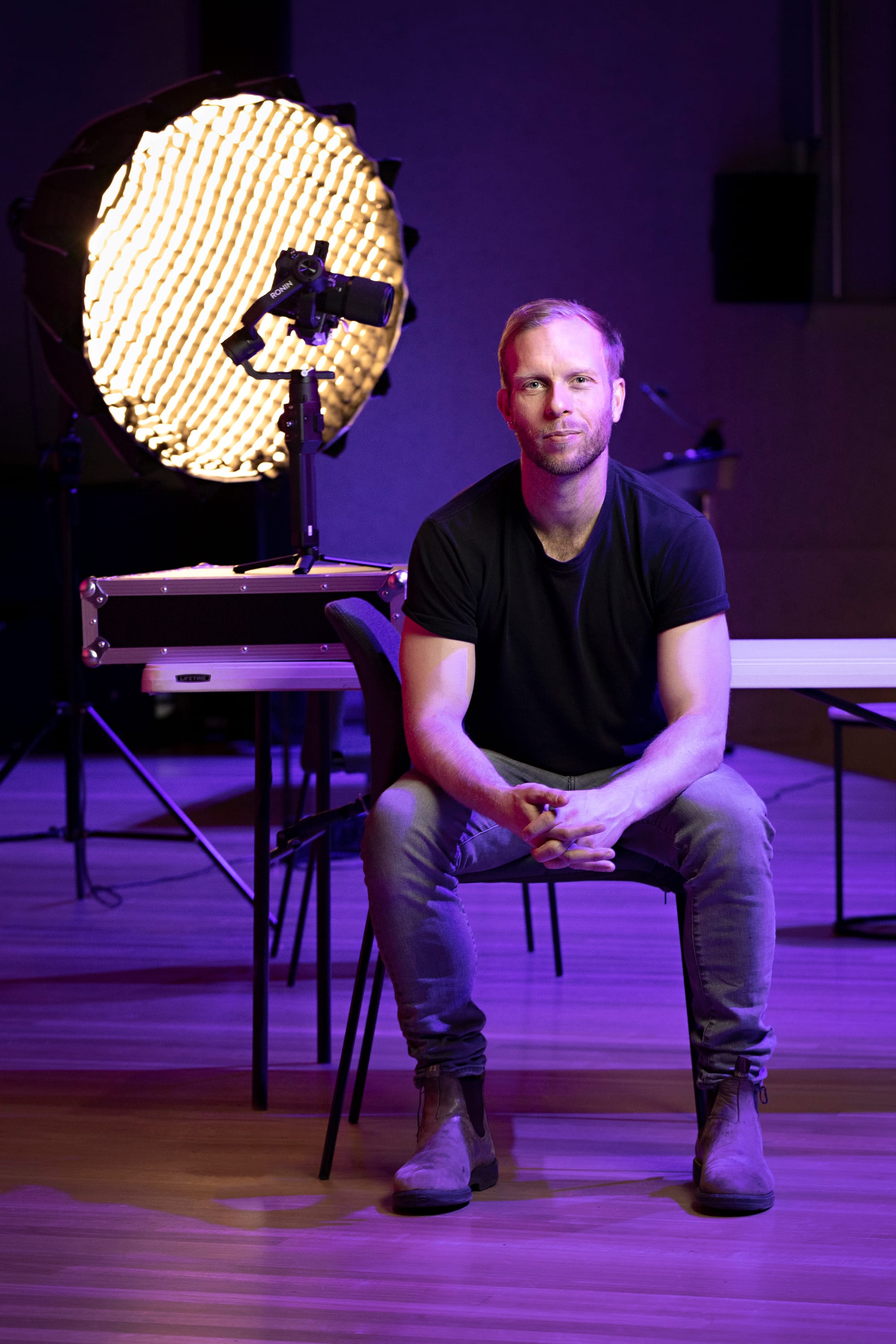
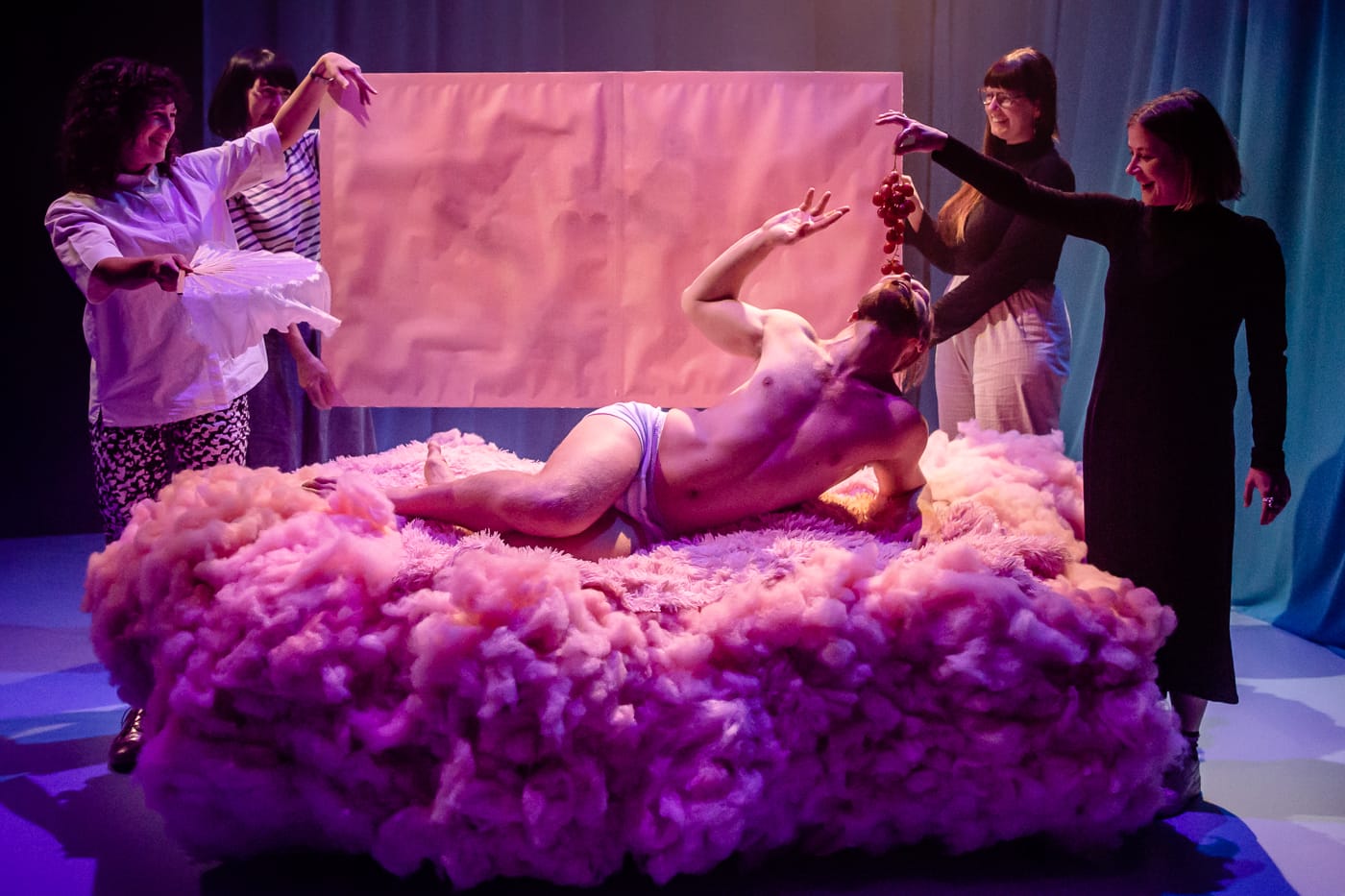
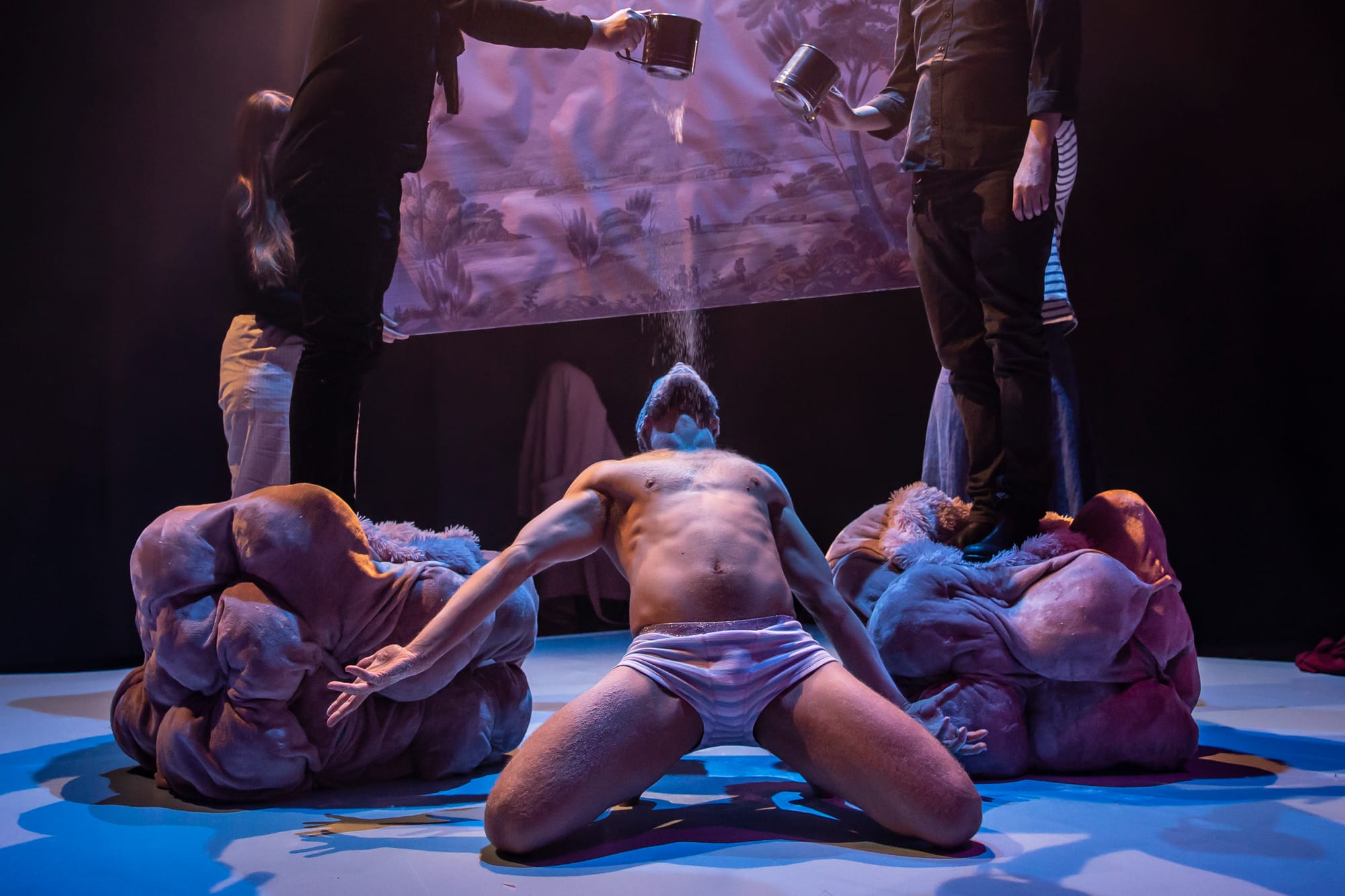
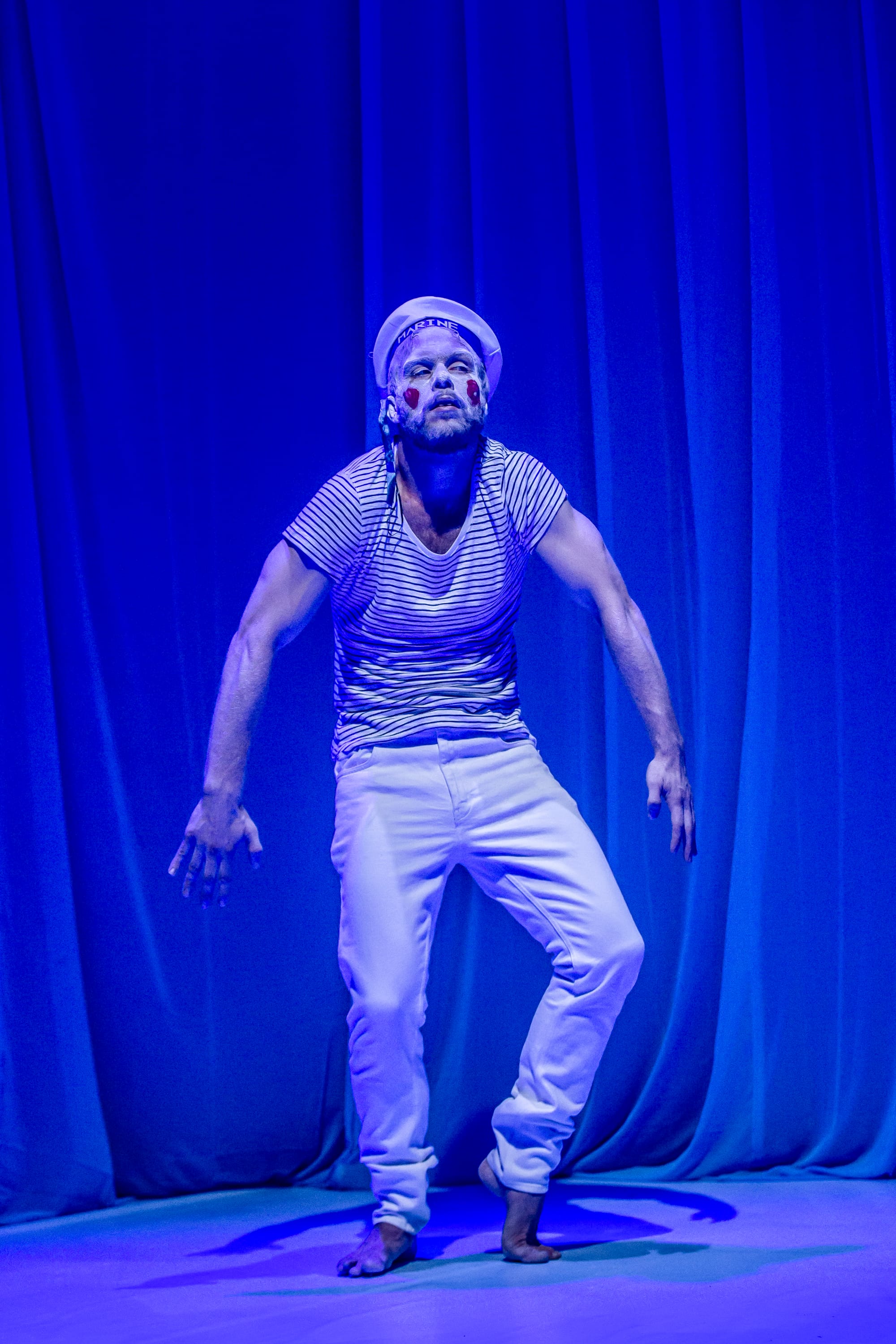
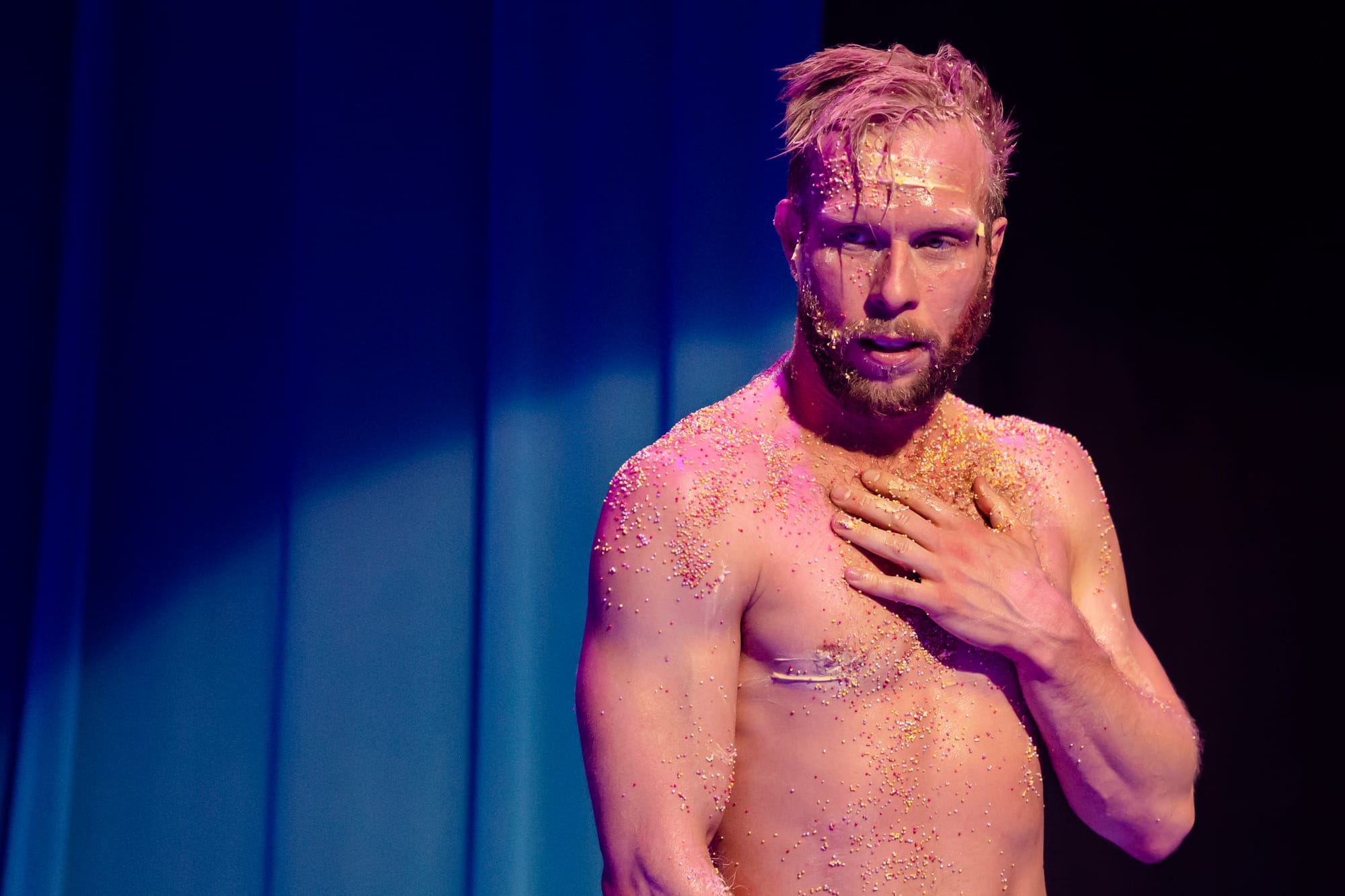
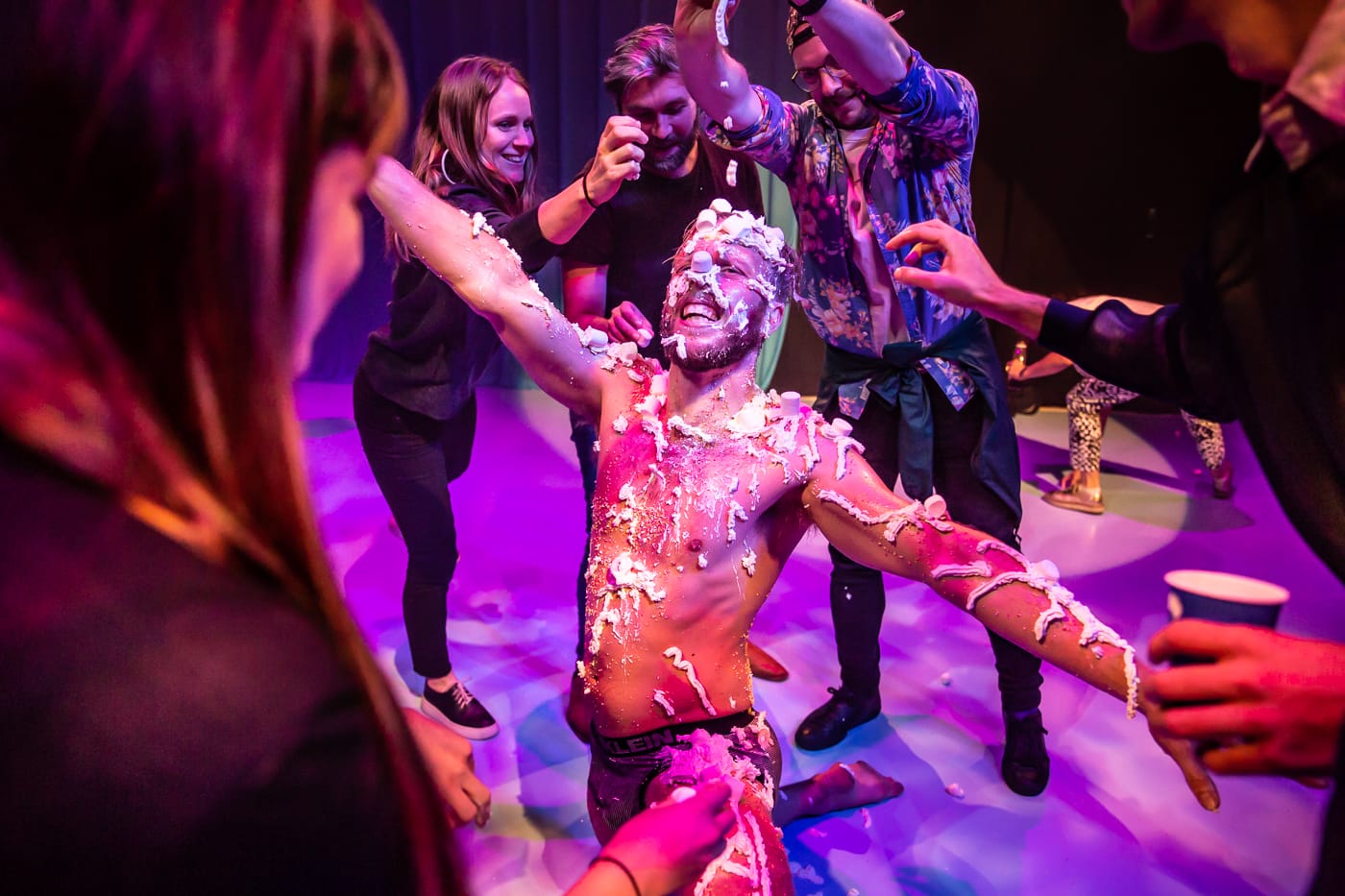
Joel Bray in Daddy. Photos: Bryony Jackson.
 Gareth Johnson