Naked Men Talking: Alan Cox
In the conversation, we talk about values, honesty, and why he helps gay men work towards monogamous relationships.

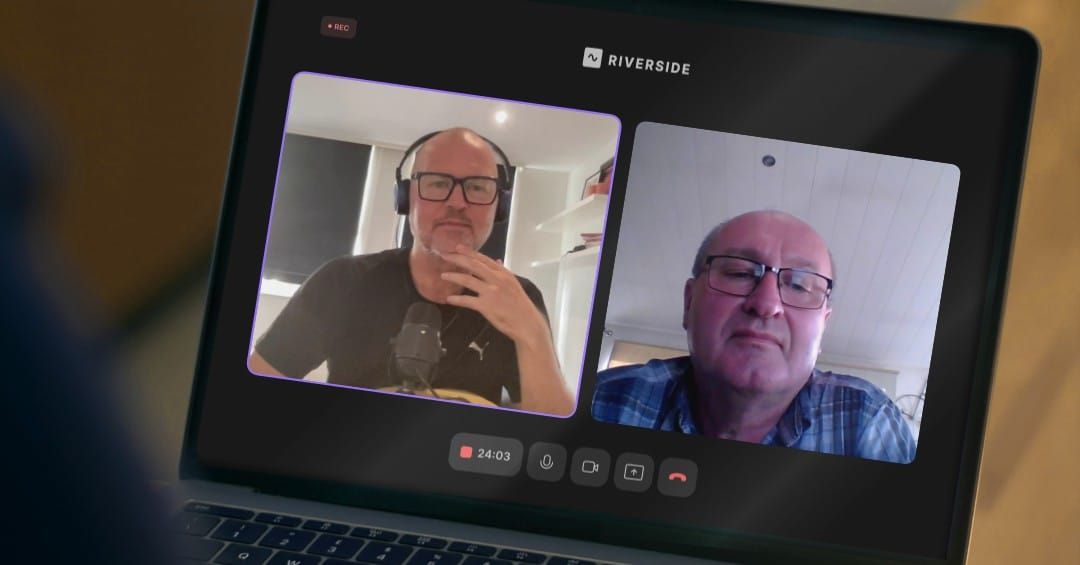
For our podcast, Naked Men Talking, I caught up with Alan Cox - a CBT practitioner and life coach who specialises in working with gay men.
In the conversation, we talk values, honesty, and why he helps gay men work towards monogamous relationships.
What are some of the life coaching needs that are unique to gay men?
Almost all of my clients actually have this particular issue that is unique to gay men, and that is internalised homophobia - the belief that because we're gay we're not worth as much as straight people.
That internalised homophobia is something that so many of us have carried through our lives.
Is that something that you can unlearn? How do you develop ways of moving past that when it's something so fundamental and something so deeply ingrained?
The first thing is to recognise that it exists. Once you recognise that something exists, you can start to tackle it, and the limiting beliefs that have built up around it.
A big focus of your work is coaching gay guys who are looking for a monogamous relationship. How did this become an area of specialisation for you?
I was married for 16 years. We were in a sort of flexible monogamous relationship.
When I left that relationship, the first thing I did was get on a flight to Beirut. I had a very active time there. But I suddenly realised that the hits that I was getting and the attention that I was getting was all very nice because it was giving me the dopamine hit. But then once that wore off, there was a real sinking feeling.
So, I decided to look at my own core values and beliefs as a gay man and decided that, for me, that kind of lifestyle wasn't the one I wanted to pursue anymore. I'd just hit 50. I started to work on my core values and beliefs. What did I want?
Then, by doing the CBT training, I came up with my own pattern and framework. And so much made sense. I looked at my friends as well, many of them in their fifties, very successful, but they were exactly the same as I had been, where they were unhappy because they were chasing the hit and not finding the depth.
After doing the CBT training, I focused on myself and then I applied it to my coaching as well. And that's how I focused on monogamy.
You mentioned a term, I think you said it was "flexible monogamy" that you had in your marriage. There's such an interesting language around monogamy - what does monogamy mean to you? How do you define that concept?
For me, a monogamous relationship in the gay context is two gay men who have decided on a common journey together that involves being completely committed to each other sexually and no one else, and every single day they look at their values together and they move towards that relationship. It is completely exclusive but what it isn't is something that is restrictive. That is a common misconception about a monogamous relationship. You can't do this, you shouldn't do that. Instead of restrictions, it's actually going deeper - you are really understanding how your partner feels and how you feel and you're working towards it together. So you can do anything that you want together but it is within the confines of that relationship.
You're saying that you're sexually and emotionally committed to each other and it's not restrictive, that anything that you're doing is within the context of that relationship. So does that mean that you can have sex with other people as long as that makes sense within the values of your relationship? Is that your definition?
No, because that would be, for me, the definition of an open relationship.
The clients that I work with, want to have everything with their partner, with the cherry on the cake on top as well.
So, if you and your partner want to have a threesome with a third, and that's aligned to the values of your relationship, that's okay?
That wouldn't be a monogamous relationship in the sense that I understand it. If you want to have a monogamous relationship and your partner wants to have bits on the side or introduce them into the bedroom, that's not monogamy - that is an open relationship.
So when you talk about flexible monogamy, what does that mean?
It meant that I was monogamous and my ex-husband wasn't, and I turned a blind eye to it. It was flexible on his side, but not on my side.
You talked about how you focused and specialised in this area of CBT coaching because you saw in yourself and your friends a level of unhappiness - even though a lot of the things in life were going well - and that stemmed from questions around their relationship. I guess I'm interested in why some men aspire to a monogamous relationship and how that solves that problem for them that you've identified?. That problem of not feeling satisfied with an otherwise seemingly perfect life. Could you just talk a little bit about the connection between why monogamy is the missing piece in that puzzle?
A lot of those men, the friends of mine in that situation, they sort of realised that sometimes it is nice to come home and there is someone there. And one of the lines in my book about this - Beyond the Apps - is: "I realised I didn't want to be lonely anymore."
That's what a lot of my clients have realised but it's how to get from that feeling of loneliness to a fulfilled relationship - that is the journey.
I wouldn't mind you just walking me through that again because it just feels like a a bit of a jump to to see the solution to loneliness as being a monogamous relationship - it's not necessarily a logical sequence to me.
What I say to clients is don't jump into a relationship with the first person who turns around and says to you, I want monogamy.
To go from the point of loneliness, the first step is working with someone such as myself to find out who you are, first of all.
Right - that's such a key starting point for anyone who wants something else in their life. It's like, where am I at right now?
Yes - know yourself before you know anyone else.
You talked earlier about the internalised homophobia as fundamentally shaping our experience as queer men. How does that connect to our desire for monogamous relationships?
That is such a difficult question. Thank you for that.
Internalised homophobia manifests in lots of different ways. For me, I've certainly been at family functions and things like that where everyone's there with their partner and their children, and I find myself thinking: "I would like some of this" but for whatever reason, it's not accessible to me. But is a monogamous relationship what I'm actually looking for? You have to recognise, what is making me think that that's what my aspiration needs to be?
We don't need to base our model necessarily on the straight pattern because for instance, who's going to be the wife, who's going to be the husband? Well, we're actually both husbands or both boyfriends.
Maybe even those gendered roles don't need to be part of our dynamic? We can just be who we are?
As long as we know who we are.
We don't have to base our relationships on our mums and dads or our best friends who are straight - we can recreate our own version of monogamy, as long as it involves exclusivity and we don't open up sexually towards other people.
Through your work, do you have any specific insights into what makes a successful monogamous relationship?
Honesty.
Monogamy shouldn't be seen as a restriction. If you walk past the sweet shop, you will look at the sweets sometimes. You might be tempted, but if you have decided as a couple that you are being exclusive, be honest and transparent.
Non-judgment as well. Definitely questioning, but not judgmental.
Also, the common beliefs and core values - working out what is fixed and what can be negotiable. As long as it isn't sex with a third party.
If you've got those core values and beliefs fixed in place and you work on them, then it will be a successful monogamous relationship. It's honesty and transparency and moving forward together.
Maybe not building your relationship upon the gay scene. I know from personal experience that you go into the scene and you can hook up within minutes. So, a successful monogamous relationship would involve developing other interests together or joining things like the gay outdoor club where you go walking instead of just getting pissed in Soho.
The most successful monogamous relationships, they review their targets. Because when you go into monogamous relationship, let's say on week one, it's going to be a hell of a lot different from what it's going to be a year later.
So, reviewing your targets together, agreeing them together and being honest and transparent together and you should be able to make it.
What are some of the barriers that people have to navigate through in pursuit of a monogamous relationship?
The first one actually is the gay community.
That feels a bit counterintuitive to me. If you're saying that in order to protect our relationship we need to step away from the community within which we exist. That feels a little weird?
No, that's not what I mean. What I mean is I think we're set up more as gay men to not be monogamous than to be monogamous. I have a lot of clients, particularly in London, who actually say that friends of theirs think that they're almost weird to even attempt or to look into a monogamous relationship. So, the gay community can actually be an issue in this.
Going back to that internalised homophobia, that can be a barrier as well, we find ourselves asking, do I actually deserve to be in a monogamous relationship?
I don't want to put words in your mouth, but are you suggesting that there's almost a bit of a hierarchy of relationships? That a a monogamous relationship is somehow of more value than a non-monogamous relationship?
No, it's just a personal choice.
If someone was thinking about looking for a monogamous relationship, what advice or guidance would you give them?
Know thyself. You will not have a successful monogamous relationship until you know who you are.
You have to get to a point where you think something needs to change before you can start looking for a monogamous relationship. Once you have worked out what you want and what you can actually bring into a relationship, then you work out exactly who you are. You challenge all that internalised homophobia. Set out what you want. Do not rush into it, but get out there and take some risks.
Things don't have to align perfectly - you just need to make sure they align in the most important places that you have and then work with your partner.
 Gareth Johnson