Pride Month
A moment of queer joy and protest for the LGBTQ community.

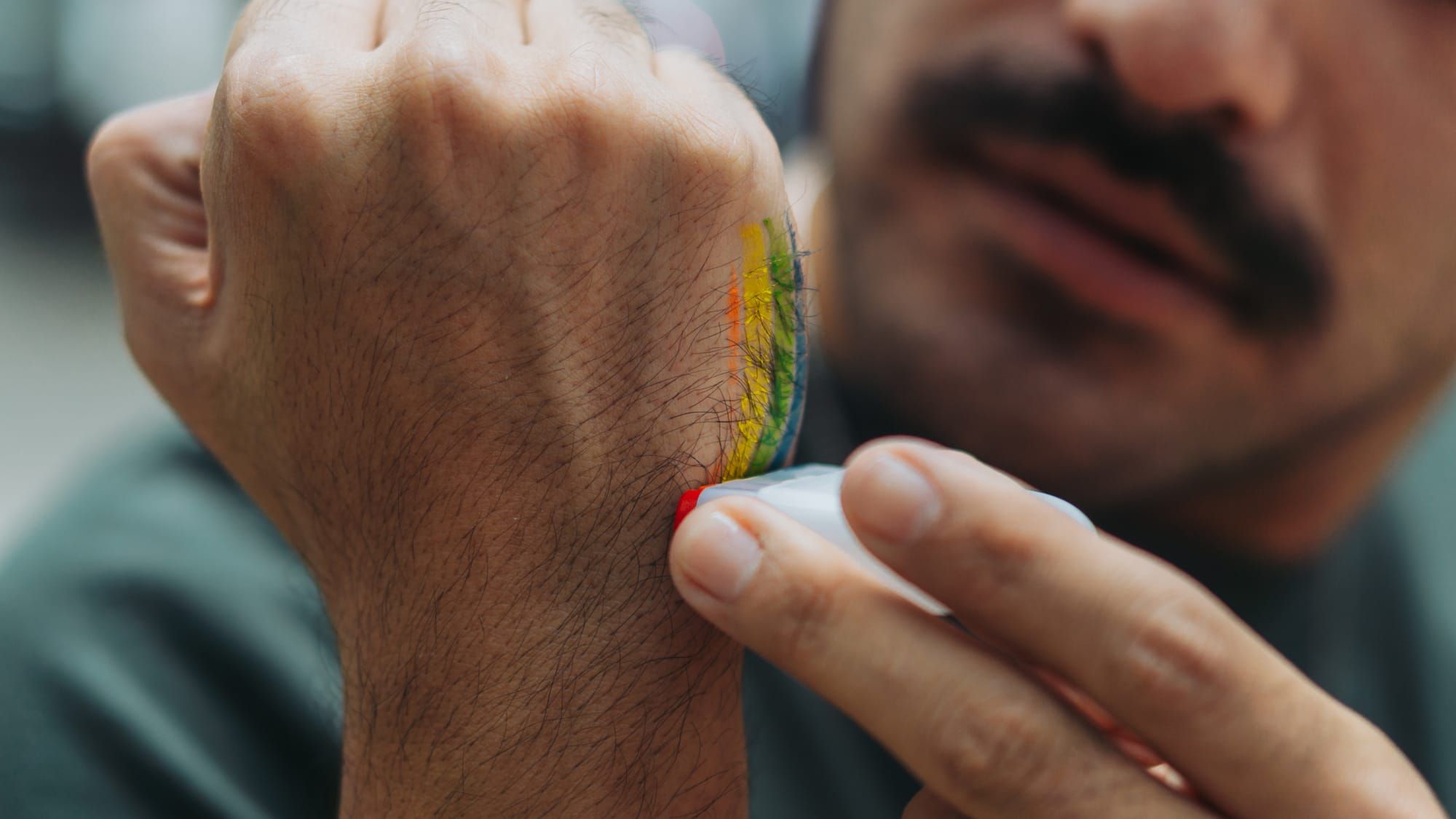
Why is June recognised as Pride Month in the United States?
Across the United States - and in many other parts of the world - the month of June is officially recognised as a time to celebrate LGBTQ Pride.
The month of June is significant because the Stonewall riots took place at the end of June in 1969.
Brenda Howard is credited with being one of the main driving forces in coordinating the first LGBTQ Pride march. Howard is also credited with the idea for a week-long series of events around Pride Day. Additionally, Howard - along with fellow activists Robert Martin and Craig Schoonmaker - is credited with popularising the word Pride to describe these events.
Throughout the month of June, towns and cities across the US and around the world hold LGBTQ Pride celebrations.
Why were the Stonewall riots a big deal?
The Stonewall riots of 28 June 1969 weren’t the first protests or confrontations between police and the LGBTQ community, but they’ve become symbolic of the growing consciousness and confidence that paved the way for the fight for equality and freedom from discrimination.
What triggered the Stonewall riots was a police raid on the Stonewall Inn. In the heart of Manhattan’s Greenwich Village, the Stonewall Inn was a mafia-run bar that was a hub for the neighbourhood’s marginalised queer community.
In the late 60s, police raids on bars like the Stonewall Inn were commonplace - part of the continuing harassment and victimisation that LGBTQ people were experiencing at that time. The raid on the Stonewall Inn on 28 June 1969 sparked that sense of frustration into violent protests - protests that lasted six days and involved thousands of people. Perhaps most importantly, the riots received widespread media coverage.
Prior to the Stonewall riots, the push for LGBTQ equality was led by ‘homophile’ advocates - organisations such as the Mattachine Society. The Mattachine Society sought to organise and speak for gay men, and they favoured assimilation. Their objective was to demonstrate that gay men were ‘normal’ and just like everybody else.
Following the Stonewall riots, and in line with the counter-culture movements of the late-60s, representatives of the LGBTQ community became increasingly emboldened and more confrontational. New organisations were established, community-focused newspapers were published, and there was more of a willingness to be open, to be visible, to be different.
It was on the first anniversary of the Stonewall riots, 28 June 1970, that the first Gay Pride marches were held . The LGBTQ communities of New York, Los Angeles, and Chicago held events to commemorate the raid on the Stonewall Inn and the violent confrontation that followed. The following year, Gay Pride marches were also held in Boston, Dallas, Milwaukee, London, Paris, West Berlin, and Stockholm . In subsequent years, the number of cities participating continued to grow.
Today, Pride events and celebrations are a big moment. They’re an important and symbolic opportunity for our community to come together, to celebrate our diversity and our visibility as well as our strength and resilience.
If you’re growing up in today’s world, starting to navigate your sexuality, starting to understand how you connect with the LGBTQ community that you see around you, it’s important to understand how LGBTQ identity has evolved over time, and the role that events such as the Stonewall riots have played in that.
History is important because it helps us learn from those that have gone before us - the battles that have been fought, the struggles that have been won, the mistakes that have been made.
You might not feel that you’ve got much connection with the people who lived in New York City in 1969, but it’s because of those people - because of their lifetimes of harassment and discrimination that culminated in six nights of violence - that we can proudly identify as gay, lesbian, bisexual, trans, queer, or however you want to define yourself within the broad LGBTQ umbrella. It’s because of those people that we can live openly as ourselves, that we can get married if we want, that we can have families if we want, that we have the freedom to lead the lives that we want. It’s because of those people that we continue to hold Pride marches around the world.
We honour the marginalised people of Greenwich Village - people who had nothing left to lose, people who were pushed so far that they had no alternative but to stand up to harassment and stand up to discrimination .
No kink at Pride?
Are you up to speed with the “No Kink at Pride” discourse? It’s a bit of a social media discussion so you might have been able to block it out. It’s tempting to ignore it all together – there’s obviously bigger issues out there – but this is a topic that is worth keeping tabs on.
What’s the debate about kink at Pride?
It’s not exactly clear when or how the “No Kink at Pride” discussion began to build momentum – writing for Vox, Alex Abad-Santos traces it back to at least 2013.
In essence, people who advocate “No Kink at Pride” want to see LGBTQ Pride events that are not overtly sexual. They don’t want to see gay fetish play, they don’t want to see actual or suggested nudity, and they want Pride events to be family-friendly and accessible to children.
While the phrase “No Kink at Pride” may be something that has emerged in the age of social media, the underlying sentiment – which is basic respectability politics – is nothing new. Respectability politics is something that the Mattachine Society unsuccessfully tried to navigate in the 1960s.
Think of the children!
There is almost a self-fulfilling logic to respectability politics that makes it hard to challenge.
Sure, we want as many queer people as possible to take part in Pride, to feel welcome and to feel included. Sure, the LGBTQ community includes people who are under the age of 18, and also parents who might want to bring their children to Pride events. Sure, Pride events should feel like a “safe space” for everyone that identifies as part of our community.
So, what’s the problem? Let’s just make Pride a non-sexual space where we wave rainbow flags and listen to some music. Let’s show the world just how normal and inclusive and family-friendly we are, right?
Assimilation versus Revolution
The Mattachine Society was established in 1950 – it was one of the earliest gay rights organisations in the US.
It’s an oversimplification, but you could broadly characterise the strategy of the Mattachine Society as one of assimilation. Much of their work centred around raising the visibility of gay men as a way of humanising us in the eyes of “mainstream” society. By demonstrating that we are average, everyday people, the Mattachine Society hoped to illustrate that we are just like everybody else and deserving of the same rights and freedom from discrimination as heterosexual people.
It was a strategy that met with some success, but it was a course of action that really only benefited white, educated men who could effectively “pass” as being straight in their day-to-day lives.
Following the Stonewall riots, and in line with the counterculture movements of the late-60s, advocates for LGBTQ equality became increasingly emboldened and more confrontational. New organisations were established, community-focused newspapers were published, and there was more of a willingness to be open, to be visible, to be different.
The emergence of the modern Pride movement – it was on the one-year anniversary of the Stonewall riots that the first Gay Pride marches were held – was an explicit rejection of respectability politics. Pride was established as an act of radical existence – a rejection of the aspirations of assimilation, a rejection of having to look or act in a socially acceptable way in order to have our humanity acknowledged by a heteronormative society that deliberately and repeatedly excluded us.
Who is Pride for?
Inevitably, things evolve. We’re not living in the 1970s, we have to adapt to the shifting landscapes of queer existence today.
But we do have to be conscious about what is driving any push for “family-friendly” Pride events, and who that might exclude.
Sure, corporate sponsors might prefer not to have their brand associated with gay leather harness wearing bears, or mask-wearing pup-play enthusiasts, or sex-workers, but Pride is not there to help banks and big corporates to tick a box on their diversity initiative. Pride is not there to help the police demonstrate how community-friendly they are. Pride is an act of radical existence.
Resisting respectability politics
The people demanding that Pride conforms to a puritanical notion of what’s acceptable public behaviour in “normal” society aren’t interested in a discussion about kink, or sexuality, or identity. Let’s not waste our energy trying to respectfully engage in a debate about our existence.
Let’s make the most of Pride month. Let’s be whoever and whatever we want to be. Let’s exist authentically. It’s time to let our freak flag fly.
Where is the next World Pride?
World Pride is an international Pride celebration that happens every two years. A different city hosts World Pride each time.
Since it began in 2000, World Pride has been held in the following cities:
- 2000: Rome
- 2006: Jerusalem
- 2012: London
- 2014: Toronto
- 2017: Madrid
- 2019: New York City
- 2021: Copenhagen
- 2023: Sydney
- 2025: Washington, DC.
- 2026: Amsterdam
- In 2028, World Pride will be held in Cape Town.
 Gareth Johnson