Naked Men Talking: Derek Murphy
In the conversation we talk forgotten stories, different perspectives, and generational trauma.

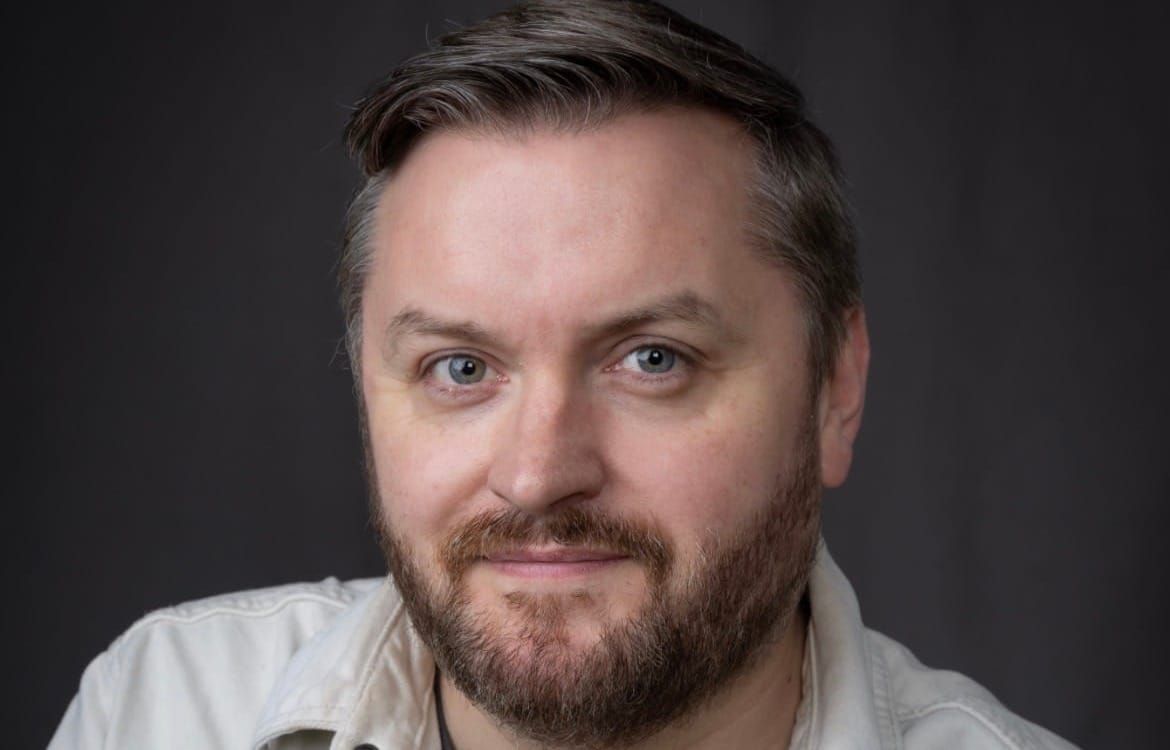
For our podcast, Naked Men Talking, we're joined by Derek Murphy - one of the creators of Mammy's House - a new play soon to premiere in London.
In the conversation we talk forgotten stories, different perspectives, and generational trauma.
You've co-created this work with Amy Clark, centring stories of Irish queer resilience and activism during the AIDS crisis in London during the nineteen eighties. Why was this something that you wanted to bring to the stage?
It started in 2020 during the first lockdown. I randomly came across this talk being given by Dr. Joseph Healy, who is an Irish historian, and he was talking about LGBT Irish migrants during the AIDS crisis. I found it really interesting because I'd never thought about it from an Irish point of view before.
I went to this online talk and it absolutely blew my mind.
Homosexuality in Ireland was illegal until 1993, which is much later than in the UK. Anyone who wanted to live their real true selves left and came to London, if not further afield.
There was no HIV/AIDS healthcare in Ireland either during the height of the AIDS crisis - the first HIV/AIDS healthcare centre opened in Dublin in the early 90s. If anyone had HIV or AIDS, they had to come to the UK to get treatment - some of the AIDS wards in London were 50% Irish. That's a nuts statistic - how do we not know about that?
I really wanted to research this more and see what else I can find. After the talk, I went off to try and do a bit of research, and there's practically nothing. We really couldn't find books about it, plays about it, movies about it. You could find a lot of old media articles, but it was a lot of fear-mongering, a lot of negativity, a lot of hatred, a lot of oppression - especially from the Irish side of things.
It's very rare to come across a story that hasn't already been told or that hasn't already been done. This felt like far too important a story to just be lost to time.
You're talking about how you were struggling to find information about that period, but you are basing this story on real people and real experiences. How did you access some of those stories for the inspiration of what you've created?
Our first port-of-call was trying to get some funding. We finally managed to get some support from the Irish Cultural Centre here in London, who are phenomenal. That enabled us to be able to do about a year of research and development.
At this point, I'd gotten Amy Clark involved, who's one of my best friends, and an absolutely phenomenally talented writer. So the two of us headed off to speak with Dr. Joseph Healy - the person who gave the talk in the first place.
We interviewed him for several hours - the experiences, the story, the history, the lived experience from him was unbelievable. We used that as a stepping stone. A lot of it was word of mouth - we managed to reach out to lots of other people, be it people who had lived through it themselves, people who'd lost family members, partners, friends, healthcare workers, politicians, that kind of thing. We really tried to cover the gamut with it.
We also managed to also reach out and speak to a man called Bernard Lynch, who is an icon. He's an absolute LGBT Irish activist icon. He's an ex-priest who was based in New York during the 80s, and he became known as the AIDS priest - he was the first person to bring it to the attention of the Irish public - to openly speak about HV and AIDS.
When you reflect on your personal story, why has this period of history resonated so strongly with you?
I'm LGBT myself. I grew up in the 80s and 90s in Cork where it wasn't good - you couldn't be openly gay. It was still treated as a very negative thing and a very oppressed thing.
It's my history. If I had been born ten, fifteen, twenty years earlier, this would have been my life. I would have been slap bang in the middle of all of this. It would have been my friends. It would have been my own personal story.
The experience I had growing up of being aware of HIV and AIDS was those horrible ads with the gravestone basically implying that everyone was going to die. That traumatised an entire generation of people.
Given the advances that we've seen in terms of treatment and prevention, our relationship with HIV is in a very different place to where it was just a few decades ago. What does Mammy's House have to say to today's audiences?
We have to understand the time period we're talking about. It's so hard to understand the psyche of it - the fear that must have been happening, the complete confusion, the lack of information, the lack of knowledge. So maybe it just has to be an understanding of the shoulders that we're now standing on.
I marched in Pride a few weeks ago along with a hell of a lot of other people. It was beautiful, it was phenomenal, we had such an amazing day, it's such a massive party. There's a reason we can do that. It's because these people did what they did. And it's really, really important that we don't forget that. The amount of blood, sweat, and tears - quite literally - that has gone into us being able to march around the streets and be ourselves and be openly gay at work and be in relationships, I just think it's really important that we remember that.
You touched on how you were a bit traumatised by the way that AIDS and HIV was talked about when you were growing up. How has working on Mammy's House shaped or evolved your relationship to sex and sexuality?
To say that working on this project has changed me is an understatement. It has been such a crazy journey, and it's been such an incredible experience that I think my mindset on everything has changed because you're learning about the best and the worst of humanity.
We're hearing about the most beautiful things that happened, and there's always people who step up, and there's always the people who run to help, and there's always the people who will literally give you the shirt off their back and then there's the complete opposite of things. There's the people who want to push you down, there's the people who want to oppress you. When you're looking at it in the scale that happened to these people in the 80s, it's hard to get your mind around.
We're the first generation post-AIDS generation. We all grew up with this thing of "have sex and you'll die" - because that's the narrative that was being fed to us. That in and of itself was extremely damaging.
It would be interesting to see where we would be at if none of this had happened - if we went from the sixties and seventies and there was no AIDS crisis. Where would we be now? I feel like we would be a very different society.
What do you hope the people feel when they come to see Mammy's House?
We have such a feeling of responsibility to these people who have opened up their hearts to us and told us their stories and their history. We do feel a real responsibility to tell this story and to show people the truth of what the realities of this were like at the time. I really hope people just come away with a better understanding of what happened and with a greater respect for the people who came before us.
There's always people in our society who are being pushed down, there's always people in our society who are being oppressed. This is the story of the ones from the past. Maybe if you see it like that, you can sort of notice it going forward and maybe try and do something to help, rather than just watch from the sidelines. There's people who need support and help and need our voices now.
 Gareth Johnson
Mammy's House
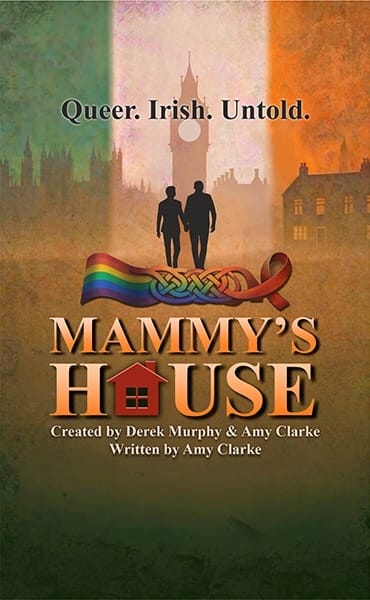
Centring stories of Irish queer resilience and activism during the AIDS crisis in London during the 1980s, Mammy's House is a new play from Derek Murphy and Amy Clarke that will premiere in London at Upstairs At The Gatehouse.
While Ireland remained bound by shame, and homosexuality was a criminal offence, thousands of Irish gay men and lesbian women crossed the Irish Sea in search of freedom, where they faced a whole new, unforeseeable challenge.
"We want to create a space where the Irish diaspora and the LGBTQ+ community can see their shared history reflected with dignity, humour, and truth..." explains Derek Murphy. "We wish to establish this story in the theatrical canon so that these vital voices are never deemed disposable ever again."
“We saw a gap in our history...” adds Amy Clarke. “A ‘double exile’ of being queer and Irish in a city that wasn't always welcoming to its Irish residents. We aren't just devising a play; we're documenting a community that was almost lost to silence.”
Cast
- Mammy/Barry : played by Derek Murphy
- Niall/Nellie: played by Conor O’ Dwyer
- Mags : played by Jemma Curran
- Sally : played by Ciara Pouncett
- Ginny/Justin : played by Stephen Cheriton
- Shay : Played by Justin Ensor
Mammy's House will run at Upstairs At The Gatehouse from 1–13 September.
 Gareth Johnson