Naked Men Talking: James Akka
We go behind the scenes of his show, Sorry (I Broke Your Arms and Legs) as he makes his case to be Head Boy.

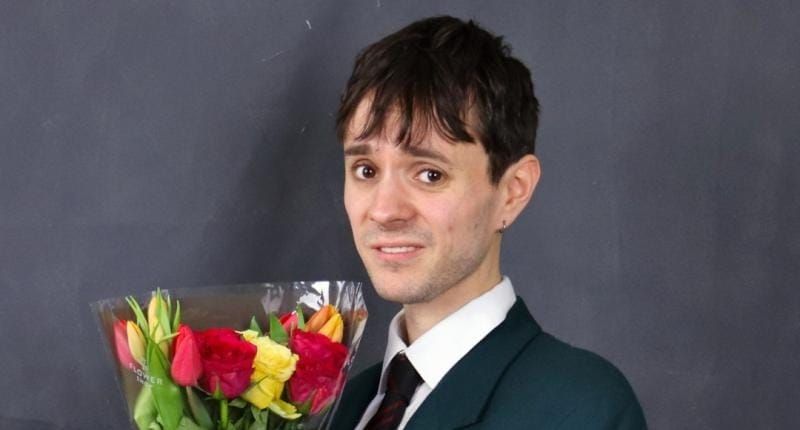
Created by James Akka, Sorry (I Broke Your Arms and Legs) sees a young Sam Wilson making his case to be selected as Head Boy of the school.
For our podcast, Naked Men Talking, I caught up with James for a behind-the-scenes look at the show.
In the conversation, we talk perfectionism, shame, and throwing up on first dates.
Your character in the show is Sam Wilson. He's making his case to be elected as Head Boy. Were you ever Head Boy? Was that your inspiration for this show?
I was never Head Boy. I think that's the inspiration. I had a level of bitterness about that.
The character is 12. At that age, I was at a prep school, which meant that Year 8 was the top year at the school.
So much is up in the air when you're 12 and 13. To be in the position of being at the top of the school with all of these politics about power in this insane microcosm. In hindsight, nothing matters at all about about who's Head Boy but at the time it feels like everything.
What was your school experience like?
Sam - the character - is not me, by any means. Nothing that happens in the show is what really happened, but a lot of the emotional truth is true. I guess he's an exaggerated version of men.
I knew I was gay when I was about 12. I had a crush on one of my teachers.
I didn't come out until I was 18.
Something that the show is about more than anything else is an overcompensation into academic perfectionism that a lot of gay and queer men experience.
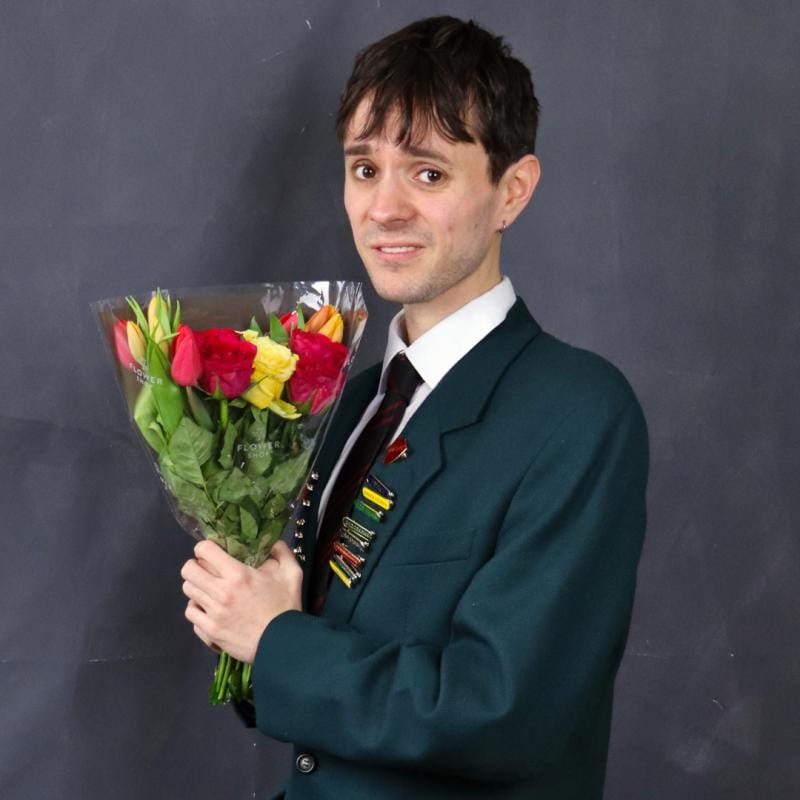
When I was at school I buried my head so deeply into academia, being in the top set for everything, getting all the badges on my blazer for everything, because I was like, well, if I can just be objectively the best at everything else then nobody will look too closely at me in this other specific thing that I'm trying to keep under wraps.
How did you discover and start to explore that acting and performing was something that you were passionate about?
I've kind of always done it. I remember I was like four at drama club, and getting really into the plays I was doing then. I kind of always did it at school.
There's a thread in the show about auditioning for the school play that is based on real events.
I remember being 16 and being like, I'd love to be an actor, but unfortunately, that's not very realistic, and so I'm going to have to be a teacher or something. It was only after a few years of assuming that I had to do something else that I realised that nobody was actually telling me what I had to do or didn't have to do. I could actually do what I wanted.
You've said that audiences want queer stories beyond the era of marriage equality. What are some of the key aspects of the post marriage equality era that you're keen to explore?
If the UK as a whole has - in a legal way - decided that gay is okay, then where does that leave those of us who are still experiencing shame?
Gay men struggle with mental health issues, with addiction - there's all sorts of documented issues within the community.
From the outside looking in - if you didn't have that data - you might think, well, gay men are okay now. They can adopt and they can get married. They can have little dogs and they can walk around East London, so they're fine.
I wanted to think a little bit about how shame still functions and exists in the mind and the body of the gay man in a world where he's being told that he's okay but he doesn't feel like he's okay.
How has your work as an actor and performer shaped your relationship with your body?
I'm certainly aware coming up to this three week run of the show that it's just me on stage for an hour - it is a physical thing. I need to be eating well and sleeping well. I have a lot more respect for my body through having been doing this for a few years now.
How does your sexuality intersect with that?
I came out to a very accepting family when I was 18 and everything went officially sort of according to plan. And yet it was still a regular feature of my time at university that I would throw up on first dates. I would vomit on first dates.
At what point of the date were you vomiting?
Sometimes before the date, but once or twice during the date.
The first time I had sex was when I was 19. I threw up before I had sex for the first time.
Are you past that now?
I am past that now, thankfully.
I wonder if my time as a performer has maybe helped me find a different relationship to anxiety and thereby have a different relationship to sex alongside that.
What about intimacy?
I think I'm probably a lot more open a person in general for having gone through my training and my time as an actor. You do have to have a level of openness.
I think it certainly makes me be a bit more aware of myself and how I'm holding myself and more able to tap in with what I'm feeling because I have to do that for a job.
What do hope that people feel when they come to see Sorry I Broke Your Arms and Legs?
A straight person said to me something along the lines of, I really loved the show. I really connected with the story of shame and perfectionism. And I don't know what it's like to be in the closet, but I think I learned a little something about that and I could relate a little bit to that.
I love when gay people come to the show, gay men especially, because there's all these tiny little things that I think gay men will understand. But also it's been quite lovely seeing straight audiences come to the show and to understand a little bit more about all the forces of play when you're on that particular journey that we go through.
Sorry (I Broke Your Arms and Legs) will run at The Pleasance Theatre from 22 April until 9 May.
 Gareth Johnson