Naked Men Talking: Paul Bradshaw
We talk identity, patterns of behaviour, and the allure of straight men.

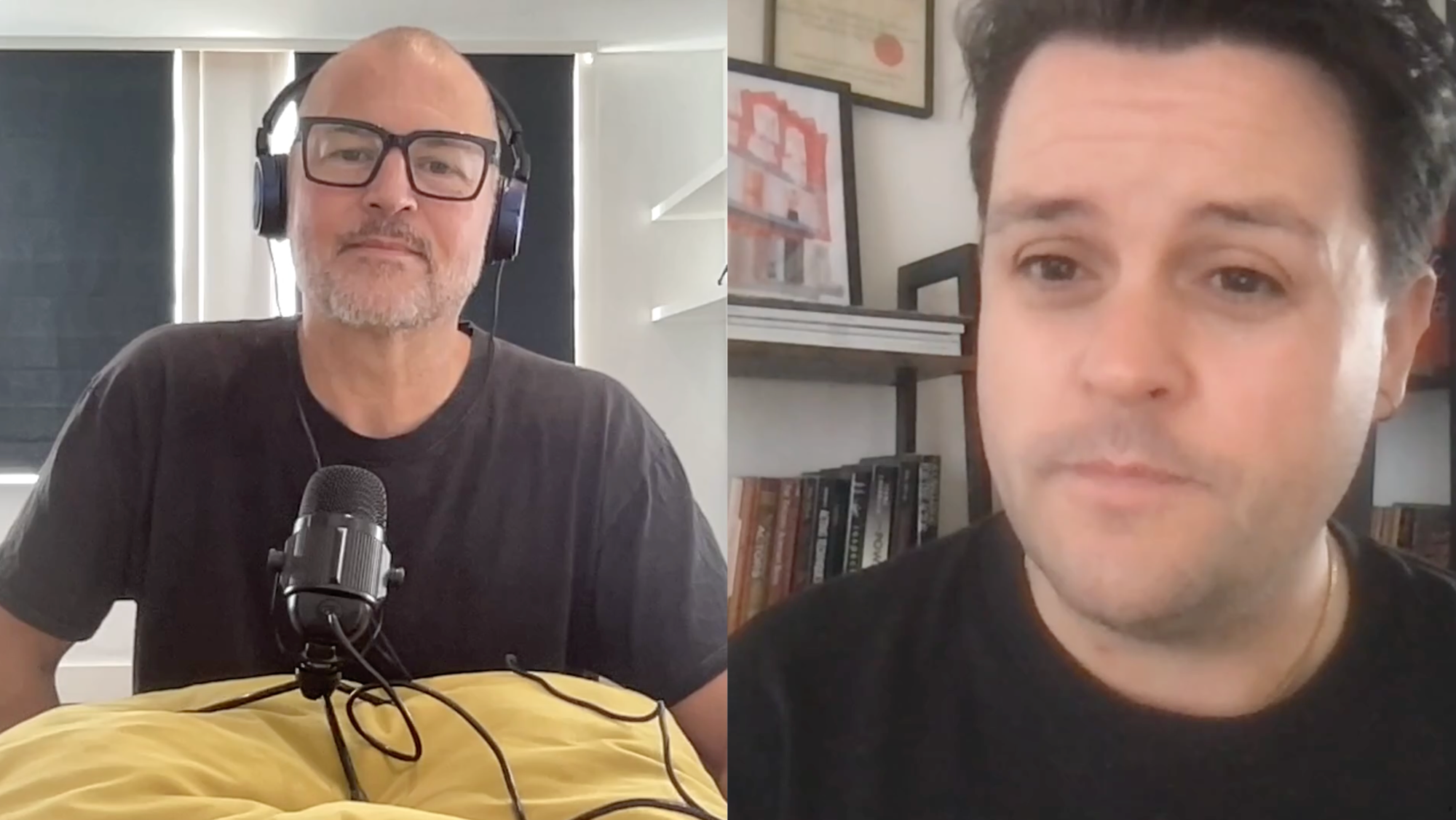
For our podcast, Naked Men Talking, I caught up with Paul Bradshaw - a theatre-maker whose double bill of tell me straight // aggy is returning to the London stage with a run at the King's Head Theatre.
In the conversation we talk identity, patterns of behaviour, and the allure of straight men.
This production is a double bill - why did it make sense to bring these two plays together?
Originally it happened by accident. Tell me straight existed before the double bill happened. I was programming Aggy at the Park. Another double bill was announced and the producer I was working with, we had this chat and we were like, could this double bill work?
It was a happy accident because we started to intentionally build a creative team to work across both plays and I realised that both plays do actually examine identity, sexuality, race, class, gender, and in a way that doesn't feel like ticking those boxes - it's characters experiencing their lives.
Let's look first at Aggy. The story revolves around the relationship of Lawrence and Mahlik. Mahlik suggests that Lawrence adopt an alter ego to advance his career. Talk a little bit about your inspiration for this story.
It started from this pithy comment from someone on a night out and it's just grown into this piece that truly speaks to a lot of what I've witnessed specifically regarding class in the industry.
That's the driving force behind the play and what happens when that's questioned.
Identity is ever changing and it's a really complex and deeply human experience to be moulded by your environments. This play speaks to that.
Let's move on to Tell Me Straight. This is exploring the allure of straight men. You said that you were drawing on personal experiences as you were writing this. Has the creative process helped you to unpack what was drawing you to straight men?
Massively. It was a real excavation and exorcism of that time of my life.
It started as a 40-page word vomit document of here are all the stories, here are all the anecdotes. When you then look at it and when you send it to your nearest and dearest for their feedback, you can't help but be like, whoa - this is a pattern. This is a pattern. It's been an amazing process.
If you look at the character in the play, what is driving that character's need or susceptibility to having sex with straight men?
I think there's two things happening where it's a validation from people who are questioning themselves - whether that's their sexuality or themselves as a human. And for Him - and me - there is a clear sense of self by this point in their lives.
And so you have this thing of people feeling like they need to be close to Him's fullness and then actually - behind the facade - Him is not okay, right?
In terms of your personal story, how did you move beyond that pattern of behaviour? Were there conscious choices being made or was it just an evolution kind of thing?
I think both. When you're going through repeated patterns, you need draw a line in the sand and figure out why I might I might be pursuing this. But you keep making the same mistake until you're ready to learn from it.
The play was a huge turning point for that for me.
How did you discover and start to explore that performing and theater-making was something that you were really passionate about?
Since primary school, I knew I wanted to do it. It was the Year 6 show - I had a part and had a ball. I think then I knew.
I remember getting to secondary school and confidently thinking, yeah, I want to be an actor, and you get to the career chats with people and they say, that doesn't happen for someone like you from your background. I kind of retreated for a few years but I had some good teachers who I felt could see my potential.
I didn't audition for drama school until I was 21. I was 23 when I got in and started - everyone else was 18. I loved training in musical theatre. It gave me a solid foundation.
Given the the journey that you've been on and the work that you do, are there any insights or lessons that you wish that you'd learned earlier? Anything that you wish that you could tell your younger-self?
Maybe don't get as pissed as much and don't spend as much money on getting drunk. All those nights of dancing at G-A-Y Late - I loved it, it was amazing. But there are so many interesting, amazing people who you meet by actually just striking up a conversation. Maybe put yourself in environments where you can be more present and listen more, to be a participating person in society.
If I'd have spent less time being the boozy adolescent, I might have arrived at this point sooner. But then maybe I needed that so that I could have stuff to talk about.
Maybe I wouldn't tell myself anything. I'd just be like, keep doing it, but maybe write a bit more of it down.
 Gareth Johnson
