Naked Men Talking: Jacob Sparrow
We talk rural communities, loneliness, and finding new narratives about HIV.

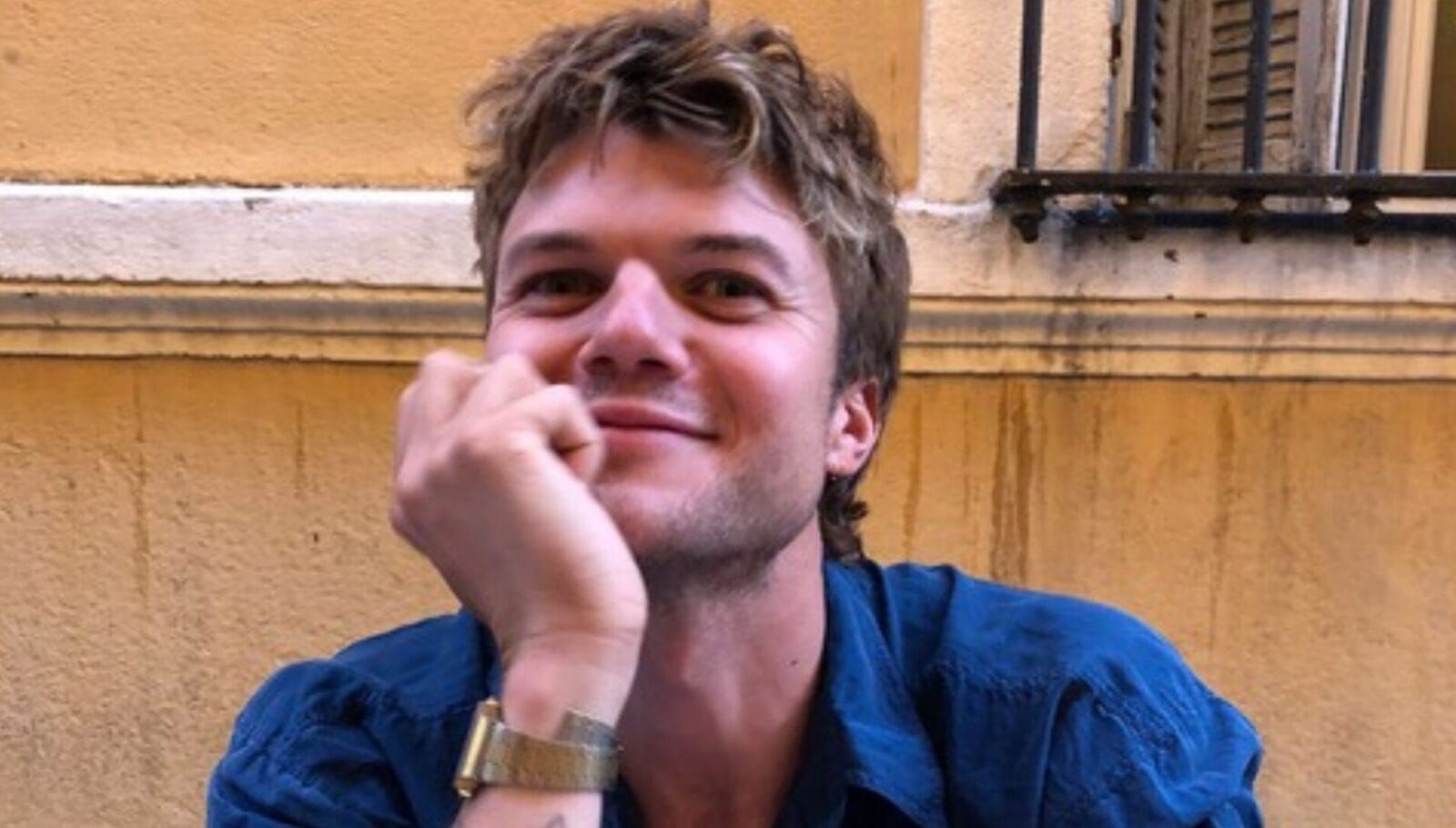
For our podcast, Naked Men Talking, we caught up with Jacob Sparrow - winner of the Leodis Prize for his debut play, Sanctuary.
In the conversation we talk rural communities, loneliness, and finding new narratives about HIV.
Congratulations on winning the Leodis Prize. This is a prize that discovers and champions unrepresented writers. How did it feel when you were announced as the winner?
I'm still sort of amazed. I was very surprised by it all.
I knew that I was long-listed because they published the long list a couple of weeks before, but I didn't expect to win.
It feels very validating that the judges saw something in the play.
How did you discover and start to explore that writing was something you were passionate about?
I've worked in theatre for a while. I work as a casting director and so have always had a part in production.
I used to write quite a lot when I was at school, but I never pursued it. I basically thought you had to have a qualification or a degree or you had to be very literate.
Then, my brilliant pal Anushka wrote a play. She's an actor and she wrote play. She was like, you might as well give it a go - what's worst that could happen?
So I made the proper time to do it - to sit in front of a laptop and just see what happens.
Sanctuary is your first play. It's a story about memory, belonging and community. What was the inspiration for this story?
I grew up in a really small village in Suffolk. Based on a true story, the play is about a woman in that village in the early 90s who tried to convert her house into an AIDS hospice - where people could come for end of life care - and the village boycotted it. In the play, a man comes to the village to stay in the hospice - exploring the sense of isolation of what being "other" feels like in that space.
My mum told me the story because I didn't have a great time when I was younger -being queer and being in a rural space. But I had also developed a narrative in my head that metropolitan areas good but anywhere outside of somewhere like London or Manchester then it was bad to be queer. I was quite black and white about it. I think what my mum was trying to do was to show me that there were people who were trying to do good things in rural areas for a community in need.
Did you need to do a lot of research in order to write the play?
I could totally imagine and realise the world having lived there - when I was younger, there was just nothing to do. There were these long summers of boredom.
In terms of actual research, I read a lot. I tried to talk to some people who were there at the time but because they might not have necessarily been on the more progressive side they weren't very forthcoming - it felt like they might be ashamed of the choices that they made.
I did a lot of theoretical research about the information we're given about the AIDS epidemic - that it started in the 80s and started in America and it was bad there, and you've got references such as Angels in America and The Normal Heart from when it was really bad. We also saw that in It's A Sin.
But you don't really hear about what happened after that. You don't hear about when it was declared not an epidemic in about 2001, or the period when medications such as AZT were preventing death. There were heaps of people who thought they were going to die and then did not. What does your life look like if you didn't think you were going to get old, but then you do?
When I was a young person, I didn't really imagine what it was like to get old, because I didn't know any old gay people.
How will today's audiences relate to that period of time, given the changes we've seen in prevention and treatment. Our relationship with HIV is completely different to what it was in the time period you're writing about?
I think about it less as an AIDS play, and think about it more as a play about loneliness and what you do when you are completely alone.
But also it's full of joy - hopefully it's quite funny. There's loads of laughs.
You talked about the otherness of being queer in a rural community and your perceptions of metropolitan versus rural life for queer people. How did you navigate through that?
I was aware of my sexuality at very young age, but other people recognise difference in you before you have acknowledged that difference. I was bullied for being gay before I really even knew what gay was.
By the age of 11, I felt that my only choice was to leave. I couldn't see anyone who looks like me or feels like me, so my plan was always to move to London as soon as I turned 18.
Since then, it's been quite a lot of therapy but also renegotiating that space and that relationship with my family.
The play is being published as well as being staged and the Leodis Prize also gives you a bit of cash as well as representation. What does that mean to you in terms of your aspirations as a writer?
I'm super-early in my journey as a writer and I'm still learning. It has given me a sense of validation and a belief that there is something in this.
What do you hope that people feel when they come to see Sanctuary?
I think I want it to be quite hopeful. I want people to expect a certain type of thing and then maybe reconsider their own ideas of what these plays can be, but also what these narratives and stories are.
There's so much in our community about stigma and about shame and what that inheritance is, but I want there to be hope for the next generation. What we didn't have is a blueprint of what it could look like - younger people now are having more and more of that. I want people to think about the privilege of mortality, but also hope.
I also hope they think it's quite funny. What is often absent from this kind of work is the joy of it - if you've met any queer person who's going through a hard time, usually they're the funniest person you've ever met. It was one of the most difficult parts of history for our community but it was probably also the most fun because I think people were living. I think people would probably feel like we have to live now because we might not live for long.
Sanctuary will run at the Edinburgh Fringe Festival from 5th to 31st August.
 Gareth Johnson