Make food not war
The art and science of culinary nutrition.
Imagine a small group of people in the kitchen, hands in masa, a pan heating on the stove (ideally a comal, if you are in Mexico). If you have never worked with masa before, the first thing you notice is the smell: earthy, slightly mineral, unlike anything else in the kitchen. Then the texture: soft and dense at the same time, yielding just enough under your palms as you press each tortilla into shape, unless you use a tortilla press, of course. Did you know there are travel tortilla presses? I have got one.
Something shifts in a room when people cook together. The conversation changes register. People slow down. There is something about working with your hands, paying attention to smell, heat, and texture, that pulls you into the present in a way that is hard to replicate elsewhere.
That, in a nutshell, is what culinary nutrition is about.
Beyond nutrients
Nutrition science has spent decades, thanks to extensive research, providing guidance on what to eat. Macronutrients, micronutrients, dietary patterns, metabolic outcomes. That knowledge matters, and it informs everything I do as a dietitian.
But as I have mentioned in previous articles, food is more than nutrients. It is pleasure, memory, culture and connection. And there is growing evidence that these dimensions are not random in how food nourishes us; they can actually be part of the same mechanism.
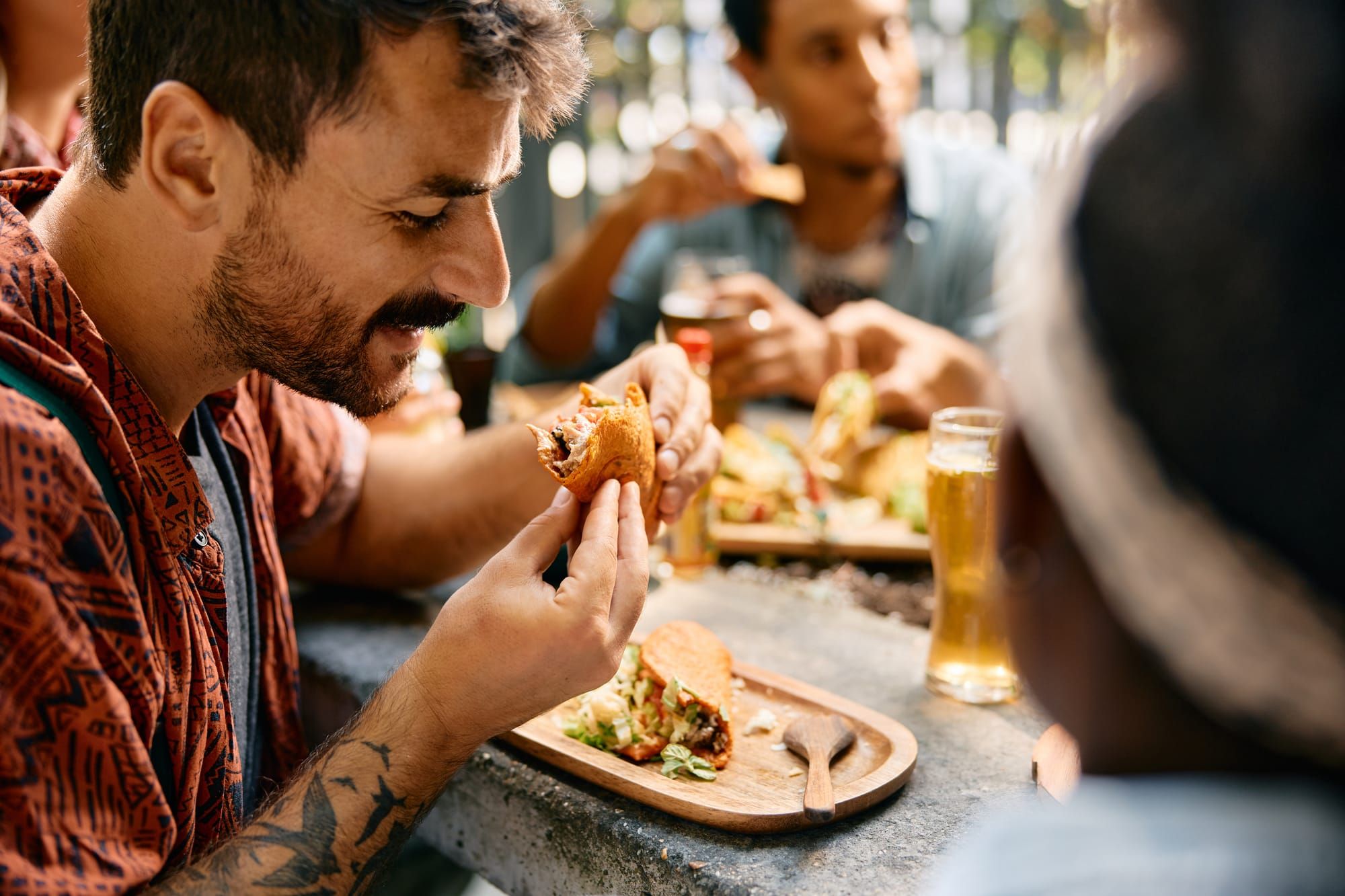
Culinary nutrition sits at the intersection of food science, nutrition and the lived experience of eating. It considers not just what we eat, but also how we prepare it, who we eat it with, and what we notice while we do so. The sensory and social aspects of food, so often treated as the soft edges of a hard science, turn out to matter more than we might assume. And the overall experience can also serve as a channel to improve nutrition, whether you are healthy or living with a medical condition.
What your senses are doing
When the tortilla hits the comal, a chemical reaction occurs immediately. The Maillard reaction, the same process responsible for the crust on bread or the colour on a roasted vegetable, begins within seconds. Hundreds of flavour compounds form. The smell shifts. The surface changes colour.
Texture matters here, too. The slight resistance of a well-made tortilla, the way it folds without cracking, these are partly the result of nixtamalisation (from the Nahuatl nextli lime ashes and tamalli unformed/cooked corn), the ancient Mesoamerican process of treating corn with an alkaline solution before grinding it into masa. This transformation alters the starch and protein structure of the corn, develops its characteristic flavour, and, remarkably, releases niacin (vitamin B3), which is otherwise bound and largely unavailable to the body. When corn spread across Europe in the sixteenth century without this process, populations dependent on it developed pellagra, a severe niacin deficiency, because the nutritional knowledge embedded in the tradition had not travelled with the grain.
Research suggests that texture, temperature and flavour are processed together to create a unified sensory experience rather than separate signals. Pleasure is woven into how we perceive food in our brains. Slowing down to notice what you are tasting, rather than eating on autopilot, is associated with greater satisfaction and a more sustainable relationship with food over time.
Have you ever noticed how a tortilla made from masa tastes categorically different from one made with regular corn flour, even when everything else is identical? That difference is chemistry. And it is also centuries of accumulated knowledge and tradition.
The company at the table
There is a reason we mark the important moments of our lives with food. Celebrations with people who are or who feel like family. Food is one of the primary ways human beings create and maintain connections, and that is not sentimental; it is well-documented throughout history.
Research on smell and memory suggests that our sense of smell has a more direct connection to the parts of the brain involved in emotion and personal recall than our other senses. This is why a particular smell can feel, even briefly, like being somewhere else: another setting, another country, another version of yourself. For those of us who carry more than one culture in our daily lives, food is often where identity is deeply intertwined with our emotions.
Cooking together adds another layer. Sharing a task, a kitchen, a meal, these are acts of intimacy that do not require grand gestures and foster bonding. The conversation that happens while your hands are busy can often be the most honest kind.
Time to reconnect
The ancient people who developed nixtamalisation paid attention to what sustained and what brought people together around a table. That accumulated knowledge, passed down through practice and shared meals, is as much a part of nutrition as any macronutrient.
This is what I try to bring to my cooking sessions: technique and nutritional insight, yes, but also an invitation to slow down and reconnect with food, with the people next to you, and with the quiet pleasure of creating something with your hands.
Spread the love with food.
Emiliano Pena is a dietician based in London
Visit Mexyemy.com to book a one-one-one cooking session with Emiliano.

This article is for general information only and is not a substitute for personalised medical or nutritional advice.
Read more about food and nutrition